Corporate Video Strategy for Businesses
Last updated: March 25, 2026
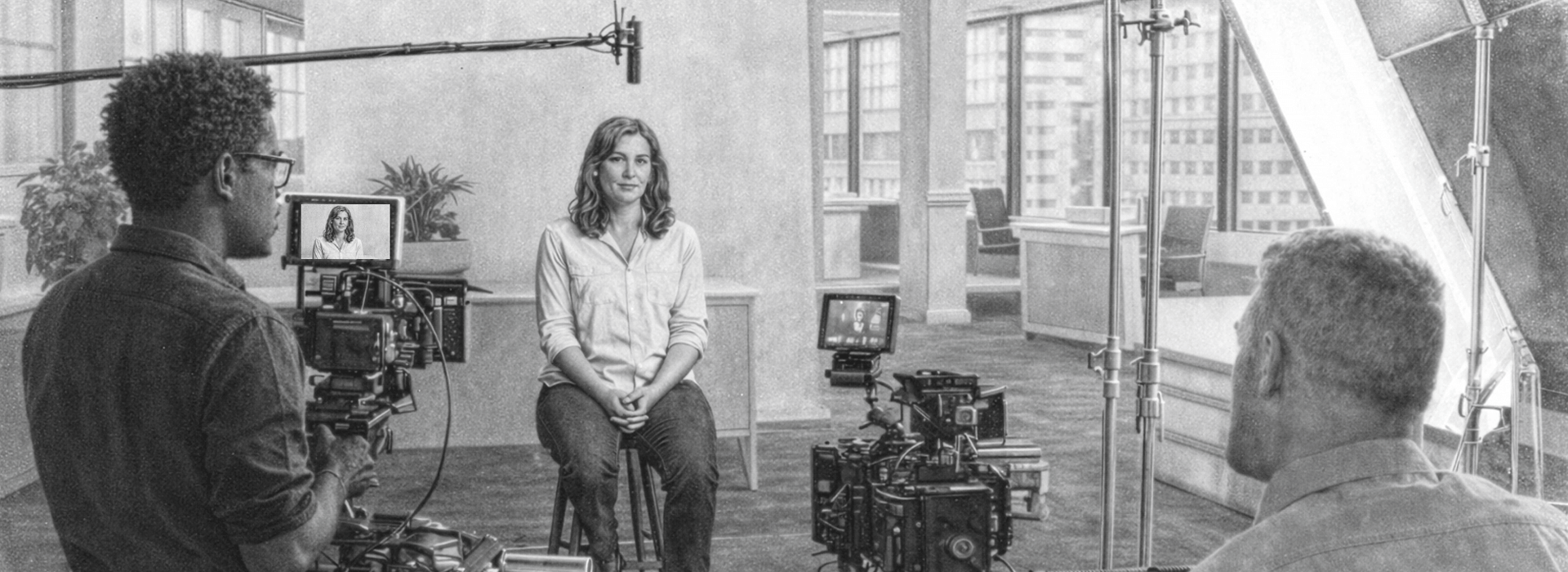
You’ve spent time, budget, and effort on a corporate video. It goes live, gets a brief burst of attention, and then stalls. Not because video no longer works, but because most businesses start in the wrong place. They begin with the asset, not the decision behind it.
That is where a lot of business video starts to drift. Teams focus on what to film before they decide what the viewer needs to understand, feel, or trust. They talk about style before purpose, delivery before proof, and output before outcome.
A stronger corporate video strategy works the other way round. It starts with the audience, the business goal, the proof that matters, and the place the video will actually be used. Once those decisions are clear, the brief gets sharper, the production gets calmer, and the finished piece has a much better chance of being watched, believed, and shared.
What matters most is not how polished a video looks in isolation. It is whether it feels relevant, credible, and easy to trust. That is what turns video from a nice extra into something genuinely useful across marketing, sales, recruitment, and brand building. Current video marketing statistics continue to show just how normal business video has become, which only makes strategic clarity more important.
Explore this guide
If there's one section to start with, begin with Start with the business decision. Most plans drift because they skip this step.
What corporate video strategy really means
Corporate video strategy is not a promise to publish constantly. It is the discipline of making better decisions before production begins. That means being clear on audience, message, stage, format, proof, distribution, and outcome. Teams that only ask what video they want usually end up with a file. Teams that ask what the audience needs in order to believe them are far more likely to end up with something useful.
That is the difference between random output and strategic video content.
It also helps to separate authenticity from roughness. Viewers do not trust a business video because it feels casual by accident. They trust it when the message feels proportionate, the speaker sounds believable, and the proof appears before scepticism hardens. That is why a stronger authentic corporate video strategy is not really about chasing a visual style. It is about removing the parts that make people pull away.
The strongest business videos do not try to do everything at once. They know whether they are there to earn first attention, explain a service, reduce perceived risk, support a sales conversation, help with recruitment, or build confidence around a brand. When that job is blurred, the whole project tends to become blurred with it.
Start with the business decision
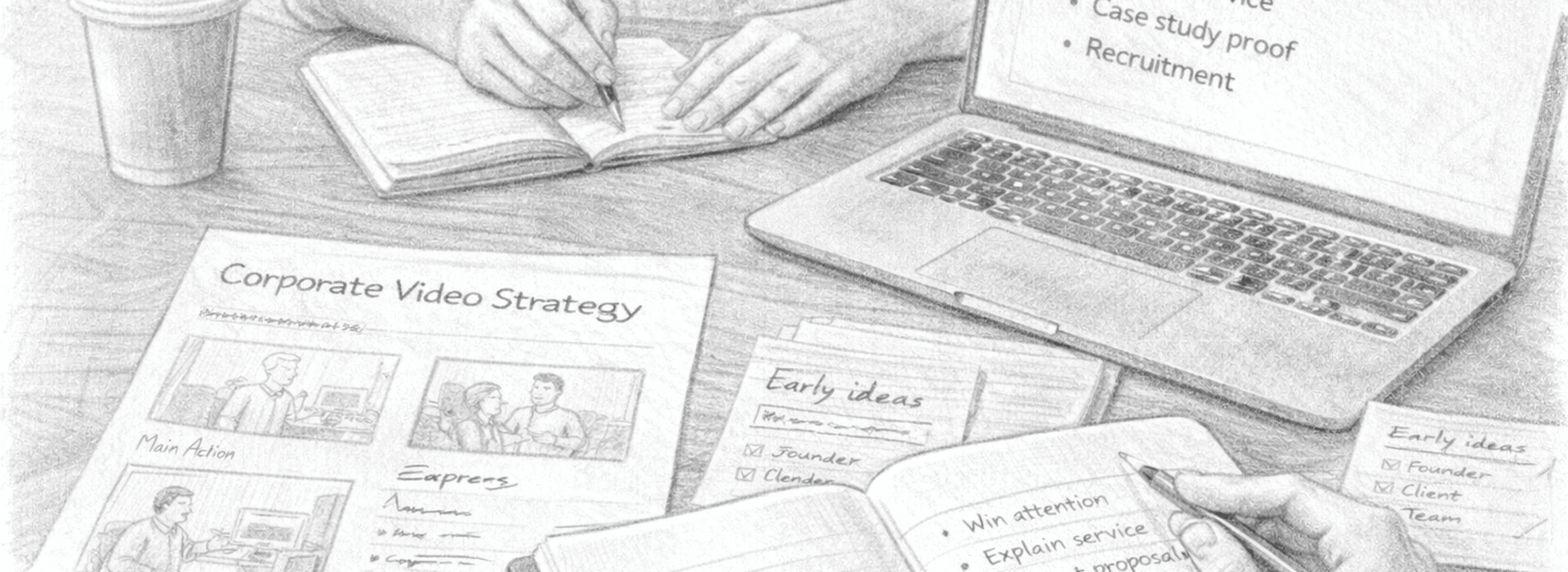
Most businesses begin too late in the chain. They start with a video type, a platform, or a rough idea of what they want it to look like. A better starting point is the decision the video needs to support. Is it trying to win first attention, explain a service more clearly, support a proposal, show proof through a case study, improve recruitment, or help a founder sound more credible on camera? Once that decision is clear, the rest of the planning gets easier.
That is why a well-built video production brief matters so much. It is not paperwork for its own sake. It gives the project a shape before production starts pulling it in different directions.
Once that job is settled, the story becomes easier to build. Good business video still needs movement, tension, change, and clarity. It simply uses those things with more control than many teams expect. That is where corporate video storytelling essentials become commercially useful rather than decorative.
This is also where visual planning earns its place. Teams sometimes think a storyboard belongs only on bigger productions, but even a light sequence plan can reveal repetition, weak logic, or missing proof long before the camera is switched on. In that sense, storyboarding in business video production is often less about drawing and more about stress-testing the idea.
| Strategic question | What strong teams settle early | What often goes wrong | Stronger move |
|---|---|---|---|
| What job is this video doing? | Awareness, consideration, decision support, recruitment, or internal clarity | One video is asked to do all of them at once | Choose the main job and let supporting edits do secondary work |
| Who needs to believe it? | A defined audience with a recognisable concern | The audience becomes everyone | Write for one real buyer, stakeholder, candidate, or customer type |
| What proof matters first? | Specific detail, lived experience, evidence, or demonstration | Claims arrive before proof | Place evidence early enough to support belief |
| Where will it be watched? | Homepage, LinkedIn, YouTube, sales follow up, event, or paid campaign | One edit is expected to fit every environment | Plan a lead asset and supporting cutdowns from the start |
| What counts as success? | Qualified reach, stronger retention, replies, reuse, sales support, or conversion lift | The whole review collapses into view count only | Choose one primary outcome and two supporting signals |
Match the format to the stage and platform
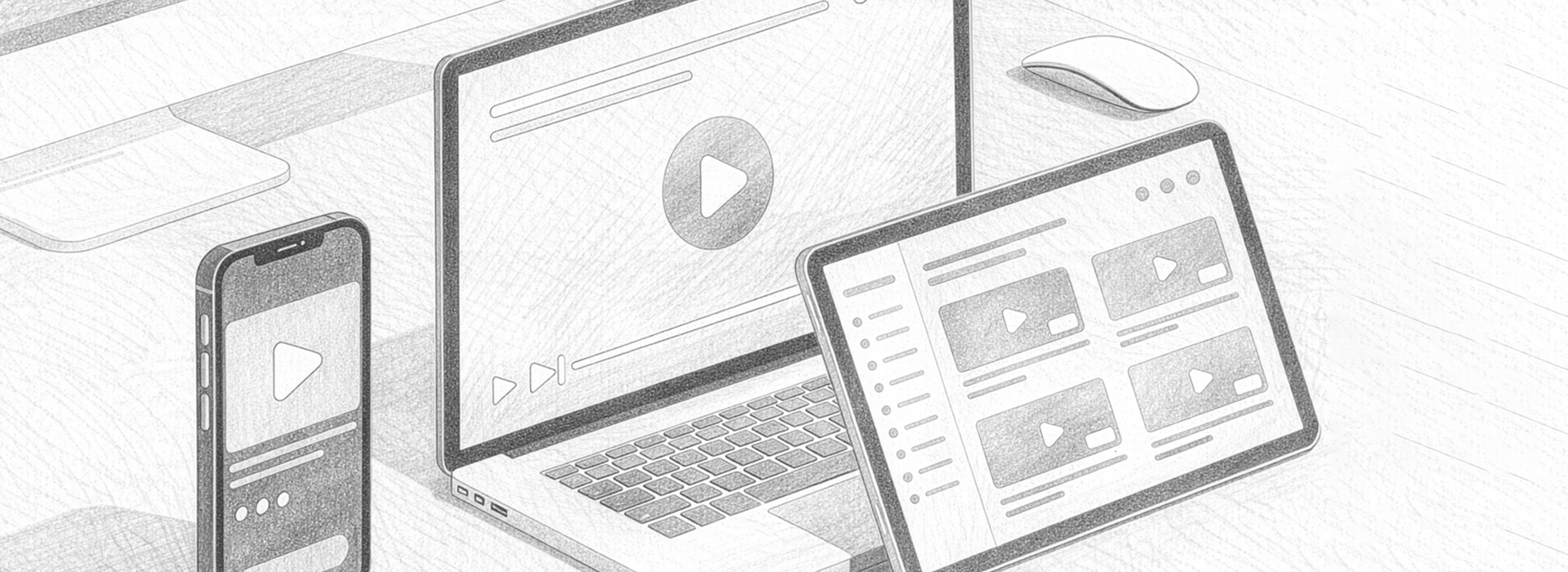
One of the easiest ways to waste a good production is to publish it in the wrong context. A homepage explainer, a LinkedIn cut, a YouTube upload, a sales follow up asset, and a short paid clip do not ask the same thing from the viewer, so they should not all begin the same way.
That is why corporate videos that underperform on YouTube often have a fit problem rather than a production problem. The opening is too slow, the promise is too broad, or the audience was never especially likely to choose that format at that stage.
Short form can help, but only when it has a proper job. It can earn first attention, test hooks, support thought leadership, or feed a wider campaign. It cannot rescue a weak message. The businesses that use short form corporate video production well tend to treat it as one part of a broader structure, which matters even more for London companies competing in a crowded B2B feed.
This is where planning for reuse matters too. A two-minute case study can become shorter cuts for LinkedIn, a sharper clip for outreach, and a more targeted version for a sales conversation. The aim is not just to create one piece of video. It is to create a structure that makes sense wherever the content needs to work.
A stronger strategy also asks a simple question. So what? If the viewer reaches the end, what are they meant to understand more clearly than before? In a good case study, that might be the challenge, the decision, the change, and the result. Without that thread, even well-shot material can feel busy rather than useful.
Decide what viewers need to believe
A lot of business video gets stuck because teams focus on what they want to say instead of what the viewer needs in order to believe it. That is a different question, and it usually leads to better work.
A new prospect may not need a big brand statement first. They may need a specific example, a customer voice, a clear explanation from the founder, or one practical detail that lowers perceived risk. Someone considering a role may not need polished values language. They may need to see how people sound, how the company thinks, and whether the culture feels lived or performed.
This is where authenticity becomes much more practical than the word often suggests. In many cases, it simply means reducing the distance between the claim and the proof.
It also affects how much polish a piece can carry before it starts to work against itself. In one common pattern, a team wants every pause removed, every natural reaction trimmed out, and every beat tightened until the final edit feels perfectly smooth. The piece may become shorter and more concise, but it can also lose the small signs of life that make a conversation feel real. Once that happens, the result may look efficient on paper while sounding slightly artificial in practice.
That same issue often shows up with presenter-led and scripted work. If everything feels too perfect, it can quietly damage trust. The response sounds polished, but not fully believed. The viewer may not be able to explain why they feel a bit of distance, but they feel it all the same. That is why the right level of restraint matters. A business video should feel considered, not airless.
The same principle applies to business video structure more broadly. Story is not there to make the work feel cinematic for its own sake. It helps the viewer understand what changed, why it mattered, and why this person or business is worth listening to.
Make the people on screen believable

Most trust is won or lost through the person speaking. If someone feels guarded, over-rehearsed, or too aware of the camera, viewers sense it before they consciously analyse it. This is why talent handling is not a soft detail in corporate video strategy. It is one of the main levers of credibility.
The fastest improvement often comes from changing the pressure on the speaker. When people feel they are being asked to represent the business, their language usually becomes vague. When they are helped to explain something real to a real audience, their answers often improve. That is the logic behind authentic corporate video interviews.
That pressure can rise very quickly when too many stakeholders stay in the room and begin shaping answers in real time. A younger team member may start out speaking naturally about their experience, only for each answer to be corrected, redirected, or reworded by someone more senior. The mood shifts. What should feel like a conversation starts to feel more like a test. The energy drops, and the audience can often feel that pressure in the final cut even if they do not know what caused it.
This is where interview handling starts to shape the credibility of the whole film. The person leading the conversation needs to notice when an answer sounds approved rather than believed, when the useful example still has not surfaced, and when a different prompt might lead to something clearer, more specific, and more honest.
A skilled interviewer also helps with pace and chemistry. If the questions feel mechanical, the whole thing can flatten out. If the interviewer has not done their homework, has little curiosity, or sounds disengaged, the person answering often gives less back. That can hurt the final result just as much as weak lighting or poor sound. The strongest interviews tend to come from a mix of preparation, genuine interest, and enough flexibility to follow the useful detail when it appears.
This is also why it helps to be realistic about duration. If the final piece only needs to be around 90 seconds or two minutes, there is rarely much value in exhausting someone with a long interview and a bloated question list. A tighter set of well-judged questions often gets a stronger result than asking everything and hoping clarity appears later in the edit.
Teleprompters can help, but only when they support clarity instead of trapping the speaker in written language. A script that looks tidy on the page can still sound stiff out loud. Stronger teleprompter delivery usually begins with rewriting for speech, shortening thought units, and leaving room for natural rhythm.
The same applies to better on camera performance more broadly. People rarely improve because someone tells them to be more confident. They improve when the line of thought is clear, the pressure drops, and the setup allows them to sound more like themselves.
Plan shoots around proof and reuse
Good strategy protects the shoot day from solving the wrong problem at full effort. Some projects need a broader crew and a more layered schedule. Others need a quiet room, strong sound, sharp questions, and enough time for one person to stop sounding like they are reading from inside the company handbook. The point is not to make everything smaller. It is to match scale to purpose.
That is why a sensible brand video production crew checklist does far more than fill a call sheet. It makes sure the right people are protecting the parts of the day that matter.
This is also where a clear production process pays off. When planning, filming, review, and delivery are easier to follow, the project is less likely to drift under late opinions or become muddled by feedback that no longer relates to the original aim.
Some business stories gain more trust when the production approach is less managed and more observational. When the aim is to show people, process, and consequence in a believable way, documentary services can sometimes carry more weight than a tightly controlled studio format.
The other advantage of planning properly is reuse. One well-structured shoot can often produce a lead asset, shorter cutdowns, internal edits, sales support clips, and future proof points without forcing every version to pretend it is the main event. That is one of the most commercial reasons to work with video agency services that shape production around the job rather than around a fixed template.
Measure business movement not just attention
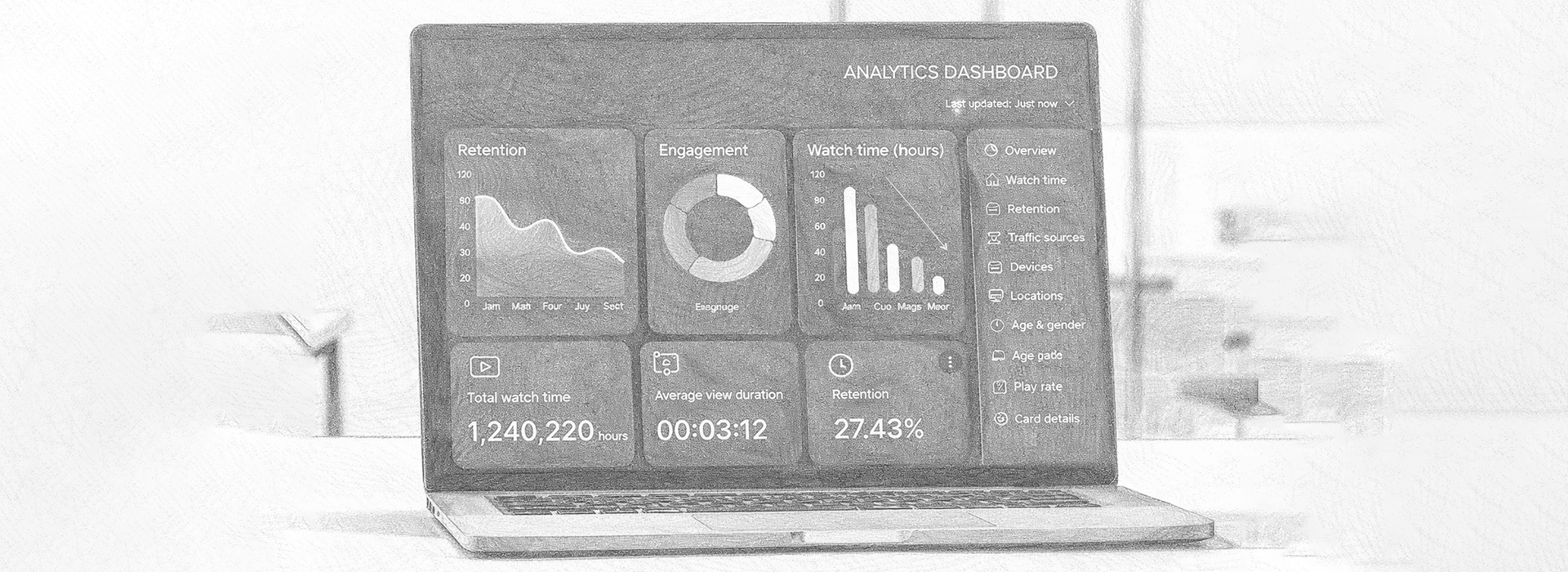
Views matter, but they are rarely enough on their own. A high view count can still hide weak action, weak fit, or weak recall. A lower count can still be valuable if the right people watched, understood, and acted.
A better measurement approach starts with what changed. Did the video improve understanding? Did it help the sales conversation move faster? Did it support a landing page that was already converting? Did the audience stay longer than usual in the opening? Did the team reuse it in pitches, recruitment, or outreach? That is where video analytics become more than a dashboard.
The aim is not to drown in reporting. It is to build a feedback loop. A useful strategy learns where viewers stayed, where they pulled away, what seemed to build trust, and what the business can stop guessing next time.
That is also why a page like this should not just help businesses make one good video. It should help them make better decisions repeatedly. Once that starts to happen, video stops feeling like a gamble and starts acting more like part of how the business communicates, sells, and earns trust.
Working on this for a real project?
Most of what's above isn't theory. It's the same thinking we apply when shaping corporate video for the businesses we work with. If you're planning a project and want a sanity check on the brief, the format, or the rollout, that's a useful conversation to have early. No pitch, no pressure, just a straightforward chat about your project.
What to read next
The next useful question usually depends on where the friction is. Sometimes it is the brief. Sometimes it is the story. Sometimes it is the person on camera, the platform fit, or the way success is being judged. These are the strongest next reads from this topic area.
| Article | Best for | Who it suits |
|---|---|---|
|
|
Settling audience, message, action, and scope before production starts drifting | Marketing leads, founders, and teams who know they need a video but have not yet pinned down the job |
| Giving a business message enough movement and shape to hold attention without sounding theatrical | Teams with a clear message that still feels flat once it reaches script or edit stage | |
| Understanding when weak performance comes from fit, packaging, and opening structure rather than production quality | Businesses publishing to YouTube that want sharper alignment between message and platform | |
| Moving away from vanity numbers and towards signals that sharpen the next decision | Marketing teams and decision makers who need a clearer view of what video is actually doing | |
| Stopping scripted pieces from sounding read and helping key voices feel steadier on camera | Founders, leaders, spokespeople, and contributors filming message-led content | |
| Getting more useful answers from people who know the subject but tighten up once filming starts | Leaders, clients, and team members contributing to interview-led content | |
| Testing sequence, proof, and visual logic before the shoot locks in the wrong structure | Producers, marketers, and teams planning structured campaigns or interview-led edits | |
| Working out what support the production actually needs without overbuilding the day | Brands hiring external production help and in-house teams comparing crew options |
Once the strategy is clear, execution becomes much simpler and far more consistent. For teams shaping business video around these principles, DevilBoy Productions can help turn the brief into a practical production plan and finished assets that suit the right audience, platform, and goal.
A business does not need endless video. It needs a clearer way to decide what should be made, why it matters, who it is for, and how success should be judged once it is live. When those choices are handled properly, video stops feeling like a gamble and starts acting more like part of how the business communicates, sells, and earns trust.