Choosing the Right Video Production Crew for Your Brand
Last updated: March 15, 2026

Choosing a video production crew can look simple at first. A few portfolios, a few calls, a few quotes, then a decision.
In practice, it’s usually less straightforward than that.
Most problems with brand video projects don’t begin in the edit. They tend to start earlier, when the crew isn’t the right fit for the brief, the contributors, the timeline, or the way the organisation works. A team can be talented and still be wrong for the job in front of them.
That’s why choosing well matters. This sits inside a wider business question about planning video properly, setting expectations early, and commissioning the right type of support, which is part of a stronger corporate video strategy for businesses.
This checklist is designed to help brands, marketing teams, and internal comms leads make a more grounded decision before filming starts. Not by chasing the flashiest reel, but by looking at the things that often shape the outcome most. Preparation, judgment, responsiveness, communication, and the ability to work well with real people in real environments. In practice, that conversation gets much easier when the company has already put together a usable video production brief.
What to look for first
A strong crew isn’t only there to make things look polished. They should also understand what the video is for, how the filming day needs to run, and what could get in the way.
That matters because brand video projects often involve:
limited time on site
internal approvals
busy contributors
changing schedules
live workplaces that aren’t built for filming
content that needs to work in more than one format
A crew that only talks about visuals may still produce something polished. A crew that understands the job around the visuals often produces something more useful.
Start with their understanding of the brief
The first thing to assess isn’t equipment. It’s understanding.
Can the company quickly grasp what the video is for, who it’s for, and what it needs to do? Or does every brief seem to get treated like the same generic brand film?
A good crew will usually want to know:
who the audience is
what the key message is
where the video will be used
who needs to approve it
what success would look like
what the deadline is
whether there are technical or brand requirements to plan around
Most briefs aren’t perfect, and that’s normal. A thoughtful production company will usually come back with a few sensible follow-up questions. If a brief goes out and there are no questions at all, that may be worth noting. Not in every case, but often enough to matter.
Those questions may cover messaging, deliverables, filming logistics, or technical points such as aspect ratio, frame rate, resolution, and where the final video will live. The point isn’t whether every detail is settled immediately. It’s whether the company seems alert enough to spot what still needs clarifying.
Early communication tells you a lot
The way a crew communicates before the project starts often tells you a great deal about what the working relationship will feel like later.
That matters because projects are driven by deadlines. If communication already feels slow, vague, or patchy at enquiry stage, that can become a bigger problem once filming dates, approvals, and delivery deadlines begin to tighten.
Useful signs include:
clear replies
sensible questions
realistic advice on scope and timing
honesty about trade-offs
a clear point of contact
signs that they understand practical delivery, not just creative language
Less helpful signs include:
slow or inconsistent responses
generic wording that could fit any brief
vague reassurance without much substance
pressure to book before the job is properly understood
no clear ownership of planning
A delayed reply on its own doesn’t always mean much. People get busy. But if a company consistently feels hard to reach or unclear in how it communicates, that’s often worth paying attention to.
| Area | Good sign | What to watch |
|---|---|---|
| Brief response | They ask thoughtful follow-up questions | They quote quickly without clarifying much |
| Communication | Replies are clear, timely, and specific | Replies are slow, vague, or inconsistent |
| Advice | They explain trade-offs in plain language | They rely on impressive-sounding but unclear wording |
| Project ownership | You know who is leading the job | Responsibility feels blurred from the outset |
Don’t judge the company by size alone
It’s easy to assume that a larger production company will automatically be safer or better prepared. Sometimes that may be true. In other cases, it isn’t.
A bigger company can bring more capacity, but that doesn’t always mean better attention, better preparation, or a better result. Smaller teams can be more focused, more nimble, and more directly involved in the work from start to finish.
There are excellent solo operators, excellent boutique teams, and excellent larger companies. Size on its own doesn’t say much about quality.
What matters more is whether the proposed setup suits the project.
Some shoots benefit from a lean crew because it keeps things calm and unobtrusive. Others need more hands because there are live event pressures, multiple locations, or a large shot list to cover. The better question isn’t how big the company is. It’s why this particular setup makes sense for this particular job.
Reviews matter, but only to a point
Reviews can help. They may tell you something about reliability, professionalism, and the overall client experience.
They’re only one part of the picture though.
Some strong production companies do a lot of work through agencies, white-label partnerships, or supplier relationships where they can’t always show the finished work publicly or collect reviews in the same way as a company working directly with end clients. That means a modest review profile doesn’t always mean modest experience.
Reviews are usually best treated as supporting evidence, not the main basis for the decision. They can reinforce a good impression, but they shouldn’t outweigh the quality of communication, the relevance of experience, and the standard of thinking shown in early conversations.
Look beyond the showreel
A showreel can tell you whether a company knows how to make work look polished. It tells you much less about how they think, how they prepare, or how they behave when the day becomes unpredictable.
When reviewing past work, it helps to ask:
have they filmed in environments like yours
can they handle interviews, real contributors, or live situations
do they seem comfortable with business-facing storytelling
is there evidence they can adapt to different levels of complexity
A beautiful reel can still leave important questions unanswered. Could that crew run a tight schedule with nervous contributors? Could they work in a busy office without making the day harder for the people involved? Could they handle changes calmly?
Those questions are often more revealing than the reel itself.
People skills matter more than many clients expect
Many brand videos depend on people who aren’t trained performers. They may be team members, senior leaders, clients, or event speakers. They need guidance, but they also need enough space to sound natural.
A strong crew will often:
explain things simply
keep the atmosphere calm
avoid over-directing
help contributors relax
know when to step in and when to leave space
A weaker crew may still make the setup look polished, but the performance can feel stiff or over-managed.
This part matters because a lot of business video success comes down to trust. If contributors feel comfortable, the content usually becomes more believable, more watchable, and more useful.
Test the chemistry before you commit
Competence matters first, but chemistry matters too.
This is the team or person who’ll be helping manage the production and guide contributors during filming. If the communication style feels awkward, overly pushy, vague, or hard to trust, that’s worth noticing.
A simple pre-call can help. Not as a formal step for the sake of it, but as a practical way to get a feel for how they think and how they communicate.
That conversation can help you judge whether they:
listen properly
explain things clearly
ask the right questions
feel calm and competent
seem like a good fit for the way your organisation works
This may sound intangible, but it often affects the working relationship more than people expect.
Ask how they handle pressure and planning
Most production companies can describe an ideal shoot day. The better test is how they talk about the less ideal version.
Real shoots change. Contributors run late. rooms become unavailable. Event timings shift. Noise becomes a problem. Priorities change. A good crew won’t pretend these things never happen. They’ll show that they know how to adapt without turning the day into a scramble.
This is also where planning matters. Strong crews usually think beyond the camera package and help shape:
the shooting schedule
contributor timings
location order
practical risks
priorities on the day
delivery expectations after filming
That’s often where experience shows up most clearly. Not in how impressive they sound, but in how calmly and practically they prepare.
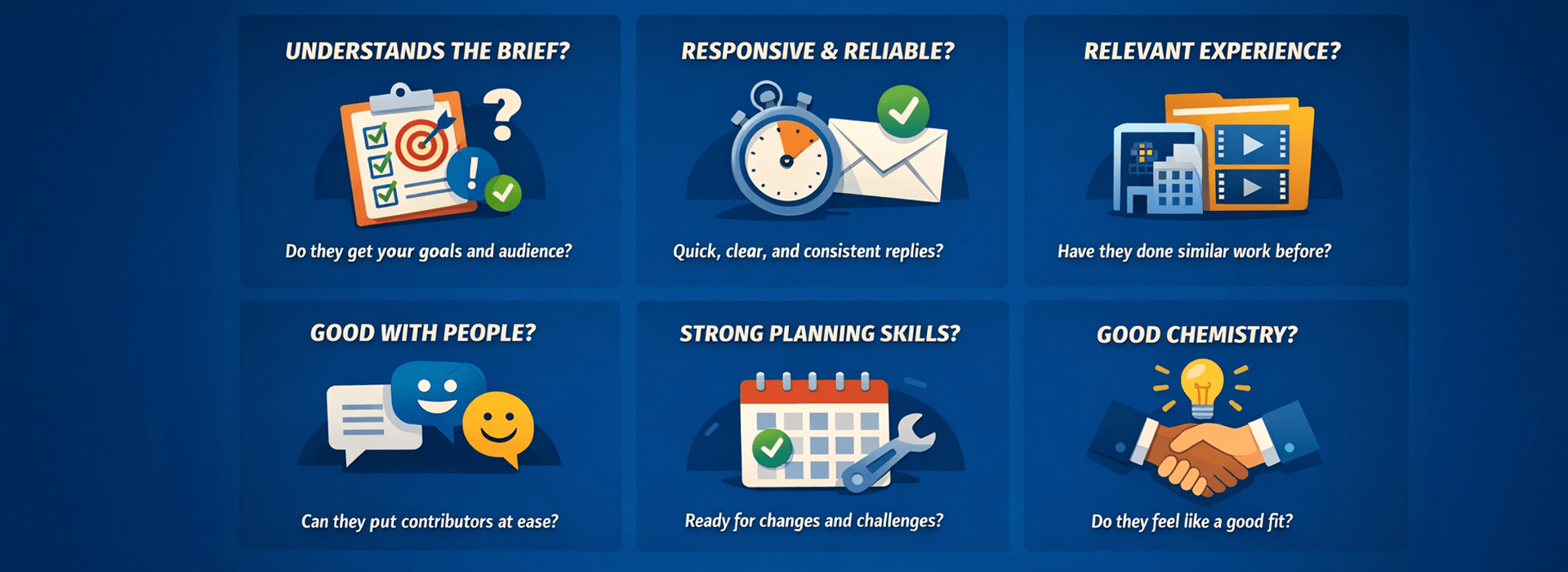
A quick checklist for comparing brand video production crews before you commit.
Use this checklist when comparing options
| What to check | What a strong answer looks like | Why it matters |
|---|---|---|
| Understanding of the brief | They ask about audience, message, deadlines, approvals, and delivery needs | Good work starts with understanding, not just equipment |
| Responsiveness | They reply clearly and in a timeframe that reflects deadline-driven work | Slow communication early can become a larger issue later |
| Relevant experience | They can point to similar business or brand work | Fit matters more than general polish |
| Handling of contributors | They explain how they help non-professionals feel at ease | Contributor comfort affects the final result |
| Planning and problem-solving | They can explain how they prepare and adapt when things change | Business shoots rarely run in perfect conditions |
| Chemistry and confidence | A pre-call leaves a clear sense that they listen well and feel competent | The working relationship shapes the whole process |
Final thoughts
The best brand video crews tend to make the whole process feel clearer. They understand the brief, ask sensible questions, communicate well, prepare properly, and stay calm when real-world pressure appears.
That’s often what clients are really buying. Not just cameras or editing, but a team that can carry the project well from first conversation to final delivery.
A crew doesn’t need to be the biggest company, the loudest brand, or the one with the most public reviews to be the right choice. It needs to be the one that feels properly matched to the brief, the people involved, and the way the project needs to run.