When 4K Matters and When 1080p Is Enough for Business Video
Last updated: March 18, 2026
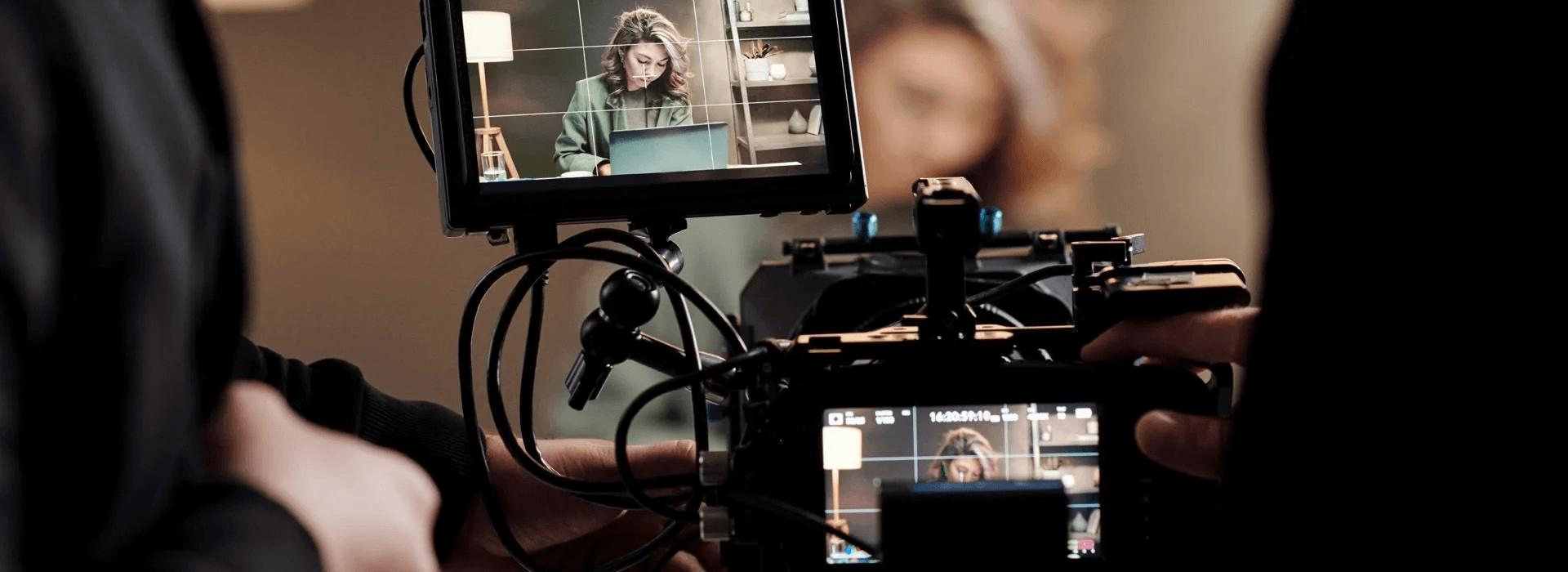
A lot of marketing teams ask for 4K because it sounds like the more professional option.
It feels safer, more current, and easier to justify.
But in most business video projects, the real question is not whether 4K is better than HD in the abstract. It is whether 4K improves the actual job the video needs to do. That matters because many business videos are watched on LinkedIn, YouTube, website pages, and internal channels where the jump from HD to 4K may have less impact than teams expect. As discussed more broadly in business video distribution and creative strategy, technical choices only become valuable when they support audience fit, delivery context, and trust.
This article focuses on the narrower decision beneath that wider strategy. When does 4K genuinely help, when is 1080p enough, and why is more detail not always the same as better-looking video?
Why this decision gets overcomplicated
One reason 4K gets overvalued is that it is easy to talk about.
“We filmed in 4K” sounds clear and impressive. “We made a context-led production decision” sounds less tangible.
But viewers rarely judge quality that way. They notice whether the message is clear, whether the speaker feels believable, whether the pacing holds attention, and whether the video feels right for the platform. Resolution matters, but it is only one part of the experience.
This is where 4K conversations often get muddled. Teams tend to bundle different questions together
how the footage should be captured
how much flexibility the edit will need
where the video will be watched
how large the viewing screen is
how much workflow complexity the team can realistically handle
Those are related, but they are not the same decision.
A video can be shot in 4K for flexibility and still be delivered in 1080p for most real-world use. In many cases, that is the smartest answer, not a compromise.
When 4K is genuinely useful in business video

Higher-resolution capture can be useful in production, but the right delivery format still depends on where and how the video will be watched.
More room in post-production
This is one of the strongest reasons to shoot in 4K.
Higher-resolution footage gives editors more room to crop, stabilise, reframe, and create multiple versions without noticeably degrading a 1080p output. That matters when one interview or campaign shoot needs to become a website film, a LinkedIn cut, a YouTube version, and a vertical social edit later.
For marketing teams, this is often where 4K earns its keep. Not because the audience is demanding 4K delivery, but because the production gets more usable value from the same shoot.
Large screens and event playback
4K makes more sense when the video is intended for genuinely large displays.
That might mean event screens, conference playback, exhibition stands, projection, or premium in-store displays. In those settings, extra detail is more likely to be visible and worthwhile.
The important point is that this is a specific use case, not a blanket argument for all business video.
Pulling stills from footage
Another useful benefit of 4K capture is that still frames can sometimes be pulled from the footage and used as supporting images.
That can help when there is no event photographer on site, when social assets are needed quickly, or when the team wants to get more value from a single production day. It does not replace dedicated photography in every case, but it can be a genuine practical advantage.
Why sharper is not always better-looking
This is where a lot of non-production discussions about 4K become too simplistic.
More detail is not always more flattering. It is not always more appealing either.
Not everyone being filmed wants every line, pore, and texture rendered with maximum crispness. In interview-led content especially, too much hard-edged detail can make the image feel harsh rather than premium.
That matters more than some teams realise. In a leadership video, case study, recruitment film, or customer story, the audience is meant to focus on the person and the message. If the image feels overly clinical or brittle, that can work against the tone the video is trying to create.
There is a point where added sharpness stops feeling polished and starts feeling unforgiving.
Softness is often deliberate. Even when footage is captured at high resolution, the finished look may be softened intentionally through lens filters, lighting choices, grading decisions, diffusion, or finishing choices in post-production.
So softer does not necessarily mean lower quality. Often it means the image has been shaped to feel more flattering, more cinematic, or simply more pleasing to watch.
Why 1080p is often enough for business delivery
For many business videos, 1080p is still a perfectly sensible delivery standard.
That is especially true for interview-led website videos, LinkedIn content, YouTube uploads, internal communications, explainer content, and fast-turnaround marketing edits.
In those contexts, viewers are far more likely to respond to message clarity, credibility, audio quality, pacing, subtitles, and platform fit than to the jump from HD delivery to 4K delivery.
There is also a practical side to this. Higher-resolution workflows can increase storage needs, upload times, processing time, and editing friction. If those added demands are not solving a real production or delivery problem, they are not automatically a good trade.
The smarter approach
For many businesses, the best answer sits in the middle.
Shoot in 4K when it gives the production and post-production team a real advantage. Deliver in the resolution that best suits the platform, screen, and viewing context.
That approach avoids two common mistakes. It avoids dismissing 4K as pointless, and it avoids treating 4K delivery as a badge of quality regardless of context.
Here is the most useful distinction to keep in mind.
| Decision | Better question |
|---|---|
| Should we shoot in 4K? | Will extra resolution help with cropping, reframing, stabilising, future edits, or still extraction? |
| Should we deliver in 4K? | Will the platform, screen size, and viewing context make that extra detail meaningfully visible and useful? |
A simple decision guide for marketing teams
If your team wants a quick working rule, use this
| Project situation | Usually the better approach |
|---|---|
| Interview-led brand video for website, LinkedIn, or YouTube | 1080p delivery is often enough, even if captured in 4K |
| Multi-version campaign needing several crops and re-edits | 4K capture is often helpful |
| Video intended for event playback or projection | 4K delivery is more likely to be worth it |
| Product detail and texture are central to the viewing experience | 4K may be justified |
| Fast-turnaround content where speed matters | HD is often the smarter operational choice |
| No photographer on the day, but stills may be needed | 4K capture adds useful flexibility |
If the message is weak, the speaker feels over-rehearsed, or the content does not suit the platform, 4K will not rescue the result. Better resolution can improve a well-judged piece of work, but it cannot replace one.
That is why the best 4K decision is rarely a technical one on its own. It is a judgement call about context, usefulness, and what the viewer will actually experience.
Q&A
Q. Is 1080p good enough for business video?
A. In many cases, yes. For website videos, LinkedIn content, YouTube uploads, internal communications, and explainer videos, 1080p is often more than enough when the message, audio, pacing, and platform fit are strong.
Q. When does 4K make the biggest difference in business video?
A. 4K is most useful when footage needs to be cropped or reframed in post-production, when stills may be pulled from the video, or when the final video will be shown on large screens such as event displays or projection.
Q. Why would a team shoot in 4K but deliver in 1080p?
A. Shooting in 4K gives editors more flexibility for cropping, stabilising, and creating multiple versions, while 1080p delivery is often the more practical choice for common viewing contexts.
Q. Can 4K footage be used to create still images?
A. Yes. High-resolution video can sometimes provide usable frame grabs, which is helpful when a team needs supporting visuals from the same shoot and no separate photographer is available.