11 London Skyline Venues for Event Filming: Views That Actually Work on Camera
Last updated: March 27, 2026
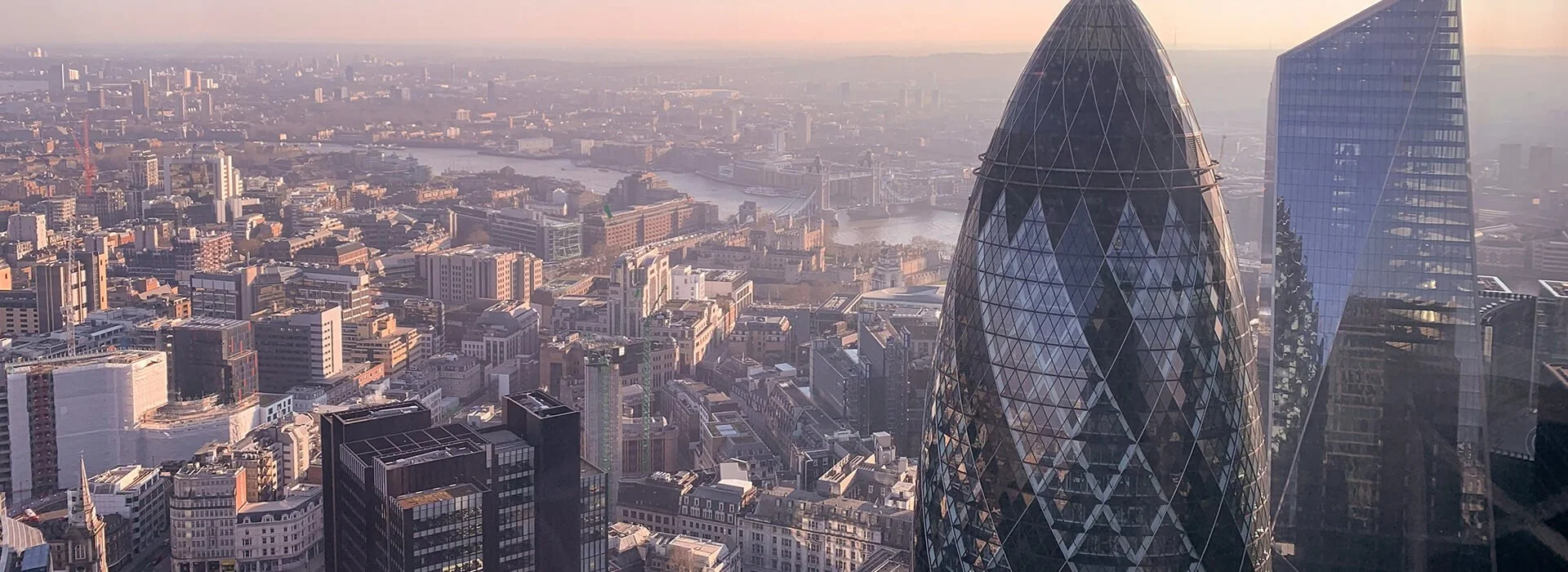
The problem with skyline venues is not that they look bad. It’s that they often look so good in a recce that people stop asking harder questions.
A high-view venue can feel like an easy win. The reveal works. The room feels premium before any staging has gone in. Guests remember the backdrop. But once the filming day starts, the usual problems arrive in a slightly different form. Speakers get backlit against glass. Reflections turn camera positions into guesswork. Terrace audio becomes unreliable. Lifts slow crew movement. The room changes dramatically as daylight drops.
That’s the real decision this post is here to help with. Not which London venues have the best views, but which kinds of aerial-view venues are still workable once filming becomes part of the plan.
This guide looks at 11 London venues with aerial views worth considering, with a focus on what height, glass, terraces, wind, and changing light do to coverage on camera. Within the wider challenge of event video production in London, venue choice matters because the room shapes what can actually be captured cleanly, consistently, and usefully on the day.
A skyline view can still make filming harder
Elevated venues can absolutely improve event video. A strong London backdrop can give the footage scale, status, and a clearer sense of place than a closed event suite ever will.
But height introduces its own production problems. Glass-heavy spaces bring reflections and uneven exposure. Rooftop terraces add wind, traffic wash, and weather risk. Popular viewing spaces can have tighter access patterns or more operational oversight than teams expect. A room that feels impressive to walk into can become much less forgiving once you need clean keynote coverage, interviews, sponsor content, and usable cutaways from the same event.
That’s why skyline venues need to be judged less by the reveal and more by whether the footage will still work afterwards. It gets much easier when you’re planning event footage around its post-event use.
London venues with aerial views worth considering, with filming trade-offs
These venues are useful not because they’re universally right, but because they show the range of ways elevated views can help or complicate filming.
| Venue | Area | Current capacity / venue note | Best fit for filming | Main production watch-out |
|---|---|---|---|---|
| 12th Knot | South Bank | Official meetings and events page lists receptions and parties for up to 300 guests. | Evening receptions, social-led event films, skyline-heavy highlights edits | Terrace atmosphere helps visuals, but audio control is not the main strength. |
| Aviary | Moorgate | Official private-events page supports lounge hires up to 30 standing, semi-private hires up to 150 standing, Palm Rooms and Terrace standing for 100, and tailored dining packages up to 120. | City-facing receptions, stylish networking events, smaller premium brand gatherings | Glass, terrace energy, and a social-first layout can work better for atmosphere than for tightly controlled speaker coverage. |
| Bōkan | Canary Wharf | Official private-hire page confirms private and exclusive hire, with the linked brochure used by the venue team for current event planning. | East London skyline shots, cocktails, networking edits, smaller premium events | Better for mood and city texture than for highly controlled stage-led coverage. |
| Horizon 22 | City of London | Official events page lists up to 280 seated or 500 standing, with AV noted on the venue page. | Large skyline events, statement launches, wide visual reveal moments | Big panoramic rooms still need careful control for speeches, interviews, and reflections. |
| Madison | St Paul’s | Official events page lists up to 120 seated and 350 standing for core spaces, with full venue takeovers up to 700 guests. | St Paul’s backdrop, terrace arrivals, hospitality events, lively brand-led recaps | Rooftop energy is a visual strength, but it can compete with filming discipline and clean audio. |
| OXO Tower | South Bank | Official private-hire page lists full venue hire up to 700 standing and 280 seated, with terraces and step-free access. | Thames-facing receptions, river-led cutaways, premium mixed-format events | Terrace value is real, but weather and ambient riverside conditions can complicate spoken content. |
| Sabine | St Paul’s | Official events page offers small-group areas for 11 to 50, semi-private space for 50 to 150, and exclusive use up to 250 guests. | Stylish skyline drinks events, post-conference receptions, short-form social content | Open terrace and glass-heavy surroundings need exposure and sound planning. |
| Sky Garden | City of London | Official private-events page lists reception capacity 700, seated capacity 300, and conference capacity 200. | Major receptions, high-production corporate events, broad skyline coverage | Glass, scale, and visual density make selective camera planning more important than the view first suggests. |
| The Standard, London | King’s Cross | Official events pages list Decimo at 140 seated and 400 standing, with additional rooftop and terrace-led event spaces available across the property. | King’s Cross launches, design-led hospitality events, skyline-led evening edits | The look is strong, but the venue’s bar-and-restaurant energy needs to be balanced against interview and speech control. |
| The Lookout at 8 Bishopsgate | City of London | Official venue page confirms private and corporate events on the 50th floor with floor-to-ceiling windows and panoramic skyline views. | Polished corporate events, skyline-led networking, premium social cuts | The view is the hero, so stage orientation and camera positions need more care than a standard event room. |
| The View from The Shard | London Bridge | Official Shard materials describe exclusive events for up to 400 guests across floors 68, 69 and 72, including the open-air skydeck. | High-impact launches, prestige events, dramatic top-of-city coverage | Height and openness are the selling point, but wind and exposure shifts need respect. |
What elevated venues change on a filming day
Glass gives you views, but it also gives you reflections
This is usually the first technical problem.
Floor-to-ceiling glass can look spectacular in person while making coverage far less predictable on camera. Reflections of screens, guests, operators, and practical lighting can appear where you do not want them. Speakers positioned against the skyline may read beautifully to the room but expose as silhouettes unless the setup is controlled carefully.
That does not make glass-fronted venues a bad choice. It just means they are rarely neutral. They need stronger thinking around camera angles, stage orientation, and what parts of the view actually help the shot rather than fight it.
Terraces add atmosphere, but also wind and noise
Open-air or partly open spaces are attractive for arrival shots, drinks receptions, and short social clips. That is part of the appeal of rooftop and viewing venues.
But terraces are rarely where you want to rely on mission-critical spoken content. Wind management, crowd spill, and shifting ambient noise all make clean audio harder. They are usually strongest as visual assets, not as your primary location for speeches, interviews, or anything you need to sound polished later.
Lifts, load-in, and guest flow matter more than they seem
At height, logistics can become part of the editorial result.
A venue may be perfect once everyone is inside the room, but still slow production down because access is tightly timed or because crew, guests, and suppliers are all funnelling through the same lift sequence. Observation-led venues can also have more defined public circulation or event windows than teams expect.
That matters because filming quality is not only about what the room looks like. It is also about whether the crew can move quickly enough to capture arrivals, transitions, interviews, atmosphere, and stage content without constantly giving ground to the building’s operating rhythm.
Sunset can improve the room and destabilise the footage
Skyline venues often look their best during the exact period when the room is changing fastest.
That can be a gift if the event film mainly needs atmosphere, city lights, and a strong sense of occasion. It can be a problem if you are also trying to maintain consistent keynote coverage, interview lighting, or a clean visual language across the whole evening.
The point is not to avoid golden hour. It is to decide whether the event should lean into that changing look, or whether the footage needs more control than the venue naturally gives you.
Venue filming checklist: questions to ask before booking
| Area to check | Question to ask the venue | Why it matters |
|---|---|---|
| Access | What is the real load-in route, what are the setup windows, and are there any lift or arrival restrictions for suppliers and crew? | Elevated venues often create more friction around timing and movement than ground-level rooms. |
| Audio capture | If we need a recording of speeches, panels, or presenter audio, can our crew plug into your in-house sound system for a clean feed? | This tells you quickly whether reliable event audio is realistic or whether you need a separate recording plan. |
| Audio capture | If we cannot take a direct feed, would we need to hire an external AV or audio team to capture reliable sound? | That exposes hidden cost, coordination, and risk before the booking is signed off. |
| Glass and reflections | Where would speakers, screens, and cameras normally sit, and how much reflection control do we actually have? | In view-led venues, the skyline can help the shot or quietly ruin it depending on orientation. |
| Interviews | Is there a quieter interior room we can use for interviews, sponsor clips, or speaker soundbites away from the main guest flow? | Without this, you often lose the most reusable and persuasive footage from the day. |
| Light | What changes in the room between daylight, sunset, and night, and can any daylight or practical lighting be controlled? | Skyline venues can transform beautifully, but that change can also destabilise coverage. |
| Permissions | Do exterior terraces, shared viewing areas, or branded shots near public-facing spaces require separate permissions or extra approvals? | The room you hire and the areas you want to film are not always governed in the same way. |
| Staging and sightlines | Where can cameras go without blocking the audience, the view, or venue operations? | A skyline room can still produce weak coverage if the layout leaves you with compromised angles. |
| Terrace use | Should the terrace be used mainly for atmosphere and arrivals, or is it realistic for speeches, interviews, or host-led pieces to camera? | This prevents teams from treating visually strong space as technically suitable space. |
| Weather | What is the fallback if wind, rain, or temperature makes the rooftop or terrace unusable on the day? | Weather risk is often the difference between a dramatic venue and a disrupted filming plan. |
Choose the venue for the footage, not just the reveal
A lot of these venues win the room very quickly. The doors open, the skyline appears, and the event feels elevated before anything else has happened.
That can be a real advantage. It can make the film feel specific and high-value very quickly.
But skyline venues only earn their place if the view supports the actual job of the footage. If the post-event need is a mood-led highlights edit, a high-rise or rooftop setting can be a strong fit. If the job includes clean interviews, reliable session edits, sponsor proof, and reusable content assets, the venue has to be judged more critically.
That is the difference this cluster should own. Not whether the room looks impressive, but whether the view improves the footage enough to justify the technical trade-offs it brings with it.
The best skyline venue is the one you can still control
Aerial views can make an event film look bigger, sharper, and more memorable.
But the best skyline venue is rarely the one with the most dramatic brochure image. It is the one where the view works with the production, not against it. The one where reflections are manageable, the light is predictable enough, the terrace is used for the right moments, and the crew can still get what matters without fighting the building all day.
That is usually the better decision.
Need help filming an event?
If you’re planning an event and want a production-aware view on venue suitability, filming, audio capture, or interview setup, we can help.
We offer event filming as part of our services, and you can get in touch here for a no-obligation quote.