What Makes Business Video Feel Credible and Trustworthy
Last updated: April 27, 2026
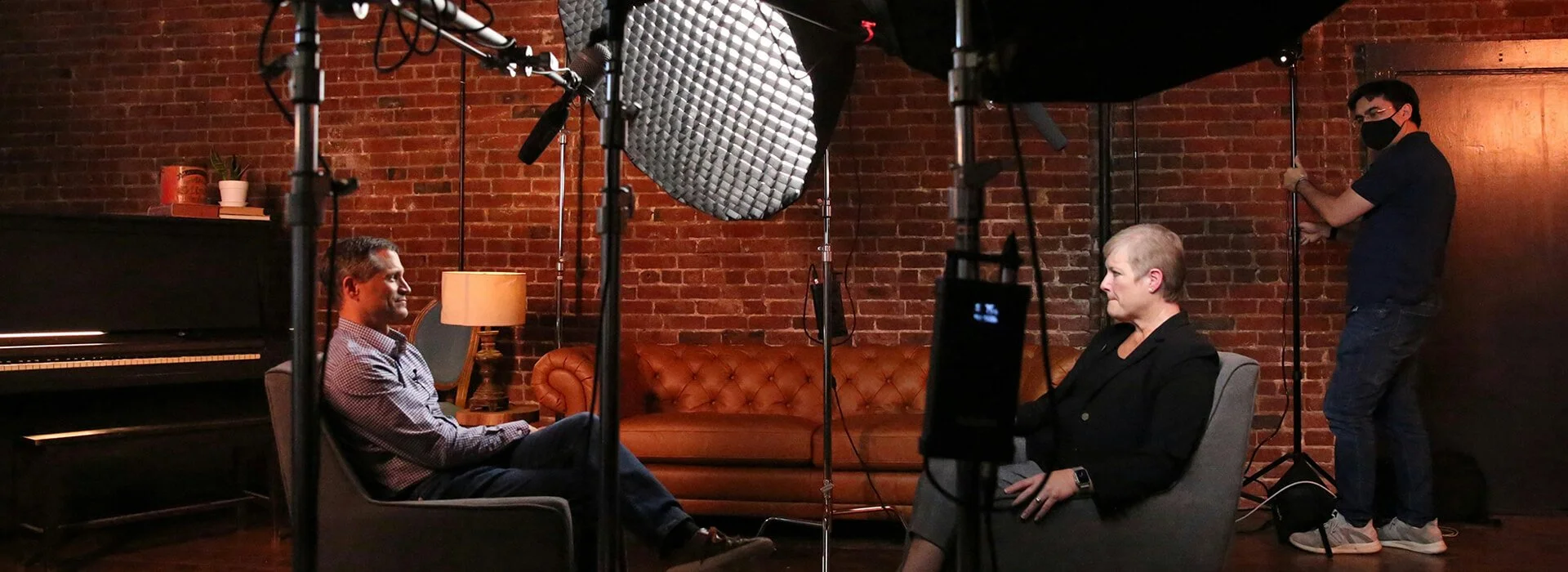
A business video can say all the right things and still fall flat.
Imagine walking into a high-end restaurant. The room looks right. The service is polished. The menu is beautifully presented. But the food arrives lukewarm, the seasoning is off, and everything tastes like it followed a recipe instead of real judgement. Nothing looks obviously wrong, yet you leave unconvinced.
Business video fails in exactly the same way.
You can have a clear message, a credible speaker, and a professional-looking brand, yet the finished piece still feels too managed, too polished, or slightly unnatural. Once that happens, trust drops fast.
That’s what this guide is about.
Not video strategy in the broadest sense. Not distribution. Not platform packaging. The narrower question is the one that often decides whether the work lands at all: what makes a business video feel credible once someone is actually watching it?
Viewers don’t just absorb the message. They size up the speaker, the tone, the setting, the pacing, and the level of finish. They decide, often very quickly, whether this feels considered, human, and worth their attention.
When those signals line up, attention holds. When they don’t, even a strong message can feel harder to trust.
Explore this guide
If there's one section to start with, begin with Attention follows credibility, not just polish. A lot of business video underperforms because too much effort goes into surface finish and not enough into reducing the small things that make the message harder to trust.
- What trust-led business video actually means
- Why good messages still lose people on screen
- Attention follows credibility, not just polish
- Spoken delivery is often the deciding factor
- Professional presence is built through small visual choices
- The right level of polish is the one the message can carry
- Different audiences read signals differently
- Where production and editorial expertise become useful
- What to read next
What trust-led business video actually means
Trust-led business video doesn’t mean making everything look casual.
It doesn’t mean lowering standards. It doesn’t mean pretending rough always feels more real. And it doesn’t mean rejecting craft. It means making choices that help the audience stay with the message instead of getting distracted by the way it’s delivered.
That usually starts with better questions.
Not just:
What should this video look like?
But also:
Why should this person feel convincing on screen?
What does the audience need to feel sure about?
Which choices help the message land?
Which ones make it feel too managed?
Those questions matter because business video often carries more than information. A founder may be asking a prospect to trust their judgement. A team lead may be asking candidates to take the culture seriously. A client may be describing results that reduce risk for the next buyer.
In those moments, delivery isn’t decoration.
It’s part of the proof.
| If the viewer needs to feel this | What usually helps | What often weakens it |
|---|---|---|
| This person knows their subject | clear language, calm delivery, specific examples, ease on camera | stiff phrasing, visible scripting, generic claims, flat tone |
| This business feels well run | good sound, clean framing, a considered setting, restrained editing | poor audio, distracting backgrounds, overdone presentation, avoidable friction |
| This message feels real | natural rhythm, human detail, clear examples, proportionate polish | over-trimmed dialogue, approval-heavy wording, too much smoothing |
| This is worth my attention | immediate relevance, low friction, credible delivery, visible conviction | vague openings, emotional overstatement, polished surfaces without substance |
Why good messages still lose people on screen
A lot of weak business video isn’t weak because the idea is poor.
It weakens when the message and the presentation stop supporting each other. Someone who sounds clear in a room can tighten up as soon as the camera starts. A brand that wants to feel more human can over-correct and start performing casualness. A careful edit can remove so many pauses, reactions, and shifts in rhythm that the finished piece feels flatter than the original conversation.
Most viewers won’t describe those problems in detail.
They’ll still feel them.
If your video starts to feel over-managed, people notice faster than most teams expect. They may not say, “the scripting is too tight” or “the edit feels airless,” but they’ll feel the distance. And once that distance appears, the message has to work much harder.
That’s why better business video isn’t always about adding more.
Quite often, it’s about removing the small things that get in the way.
Attention follows credibility, not just polish
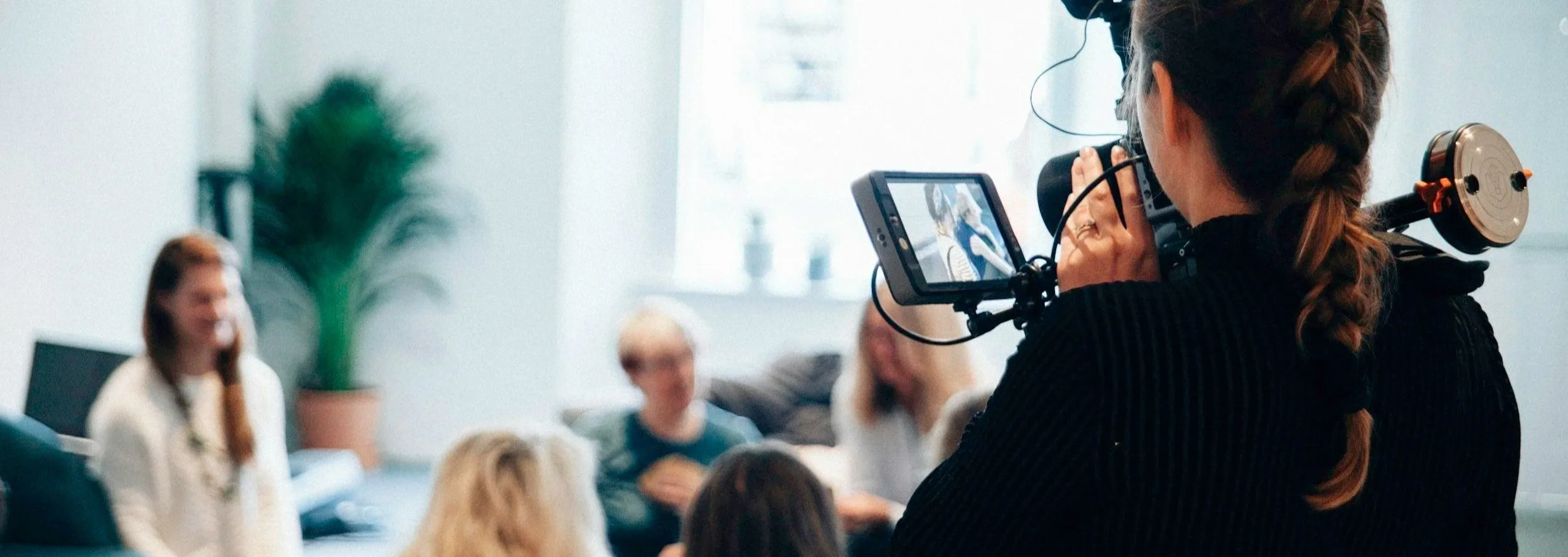
Attention is often treated like a pacing issue.
Sometimes it is. But in business video, attention is often a confidence issue first. People keep watching when the video feels relevant, clear, and grounded. They drop off when it feels vague, too rehearsed, too promotional, or too eager to impress before it has earned the right.
That’s one reason highly polished business video can still underperform. The finish may look strong, but the viewer senses that something human has been smoothed out along the way.
That doesn’t mean all effective video should feel loose.
It means polish only helps when it supports the message. Once the finish starts to outpace the substance, the work can start to feel less persuasive, not more.
That’s also where teams can lose time. More revisions. More post-production. More tiny fixes. Meanwhile, the bigger gain may come from getting the work in front of the right people sooner and putting more energy into how it will actually be used.
If you’re trying to build confidence in a person, the wrong level of finish can work against you. Viewers don’t need perfection. They need enough clarity and control to focus on the point without feeling pushed away by the presentation.
| If the video mainly needs to do this | What you need to protect | What usually goes wrong if you do not |
|---|---|---|
| Build confidence in a person or team | ease of delivery, clarity, clean presentation, lived detail | the video looks professional but the people feel distant |
| Explain a service or offer | clear structure, believable examples, the right level of support from visuals or narration | the explanation sounds processed rather than useful |
| Earn confidence from prospects or stakeholders | credible speakers, specific proof, restrained editing, proportionate finish | the piece feels generic, over-managed, or too branded to trust |
| Hold attention in a short-form context | immediate relevance, conviction, natural pacing, a clear point of view | the video moves quickly but still gives little reason to care |
Spoken delivery is often the deciding factor

In many business videos, the person speaking isn’t just delivering the message.
They are the message.
That’s why spoken delivery sits so close to the centre of this topic. A capable expert who suddenly sounds formal, flattened, or too approved can weaken the whole piece. The facts may still be right. The force behind them becomes harder to feel.
I’ve seen experienced founders sound far less convincing on camera the moment their wording became too polished to sound like their own.
This is also where many teams make the wrong call on narration.
Voiceover isn’t automatically right or wrong. It helps when the structure needs guidance, when context needs to be added cleanly, or when the format genuinely benefits from an organising voice. It gets in the way when it’s being used to cover weak interviews, thin proof, or material that would land better if a real person carried more of the meaning.
That’s a judgement call, not a finishing touch.
When narration becomes the safer option by default, it’s often worth stepping back and asking whether the film would be stronger with less explanation and more presence. That’s exactly the question explored in when to use a voiceover in brand video.
The same goes for on-camera delivery. When someone starts sounding guarded or over-rehearsed, the problem usually isn’t that they need to sound more polished. It’s that they need better support, better prompts, or less pressure. That’s the territory covered in how to sound natural and credible on camera.
| If the speaking style feels like this | What the audience often assumes | What usually needs adjusting |
|---|---|---|
| clear, calm, and natural | the speaker knows the subject and is comfortable saying it | very little, protect the natural rhythm |
| formal, stiff, or approval-heavy | the message has been over-managed | wording, prompting, and delivery pressure |
| over-energised or too performative | the confidence is being acted rather than felt | tone, pacing, and the level of direction |
| flat, drained, or detached | the message matters less than the script suggests | room conditions, prompts, comfort, and speaker support |
Professional presence is built through small visual choices
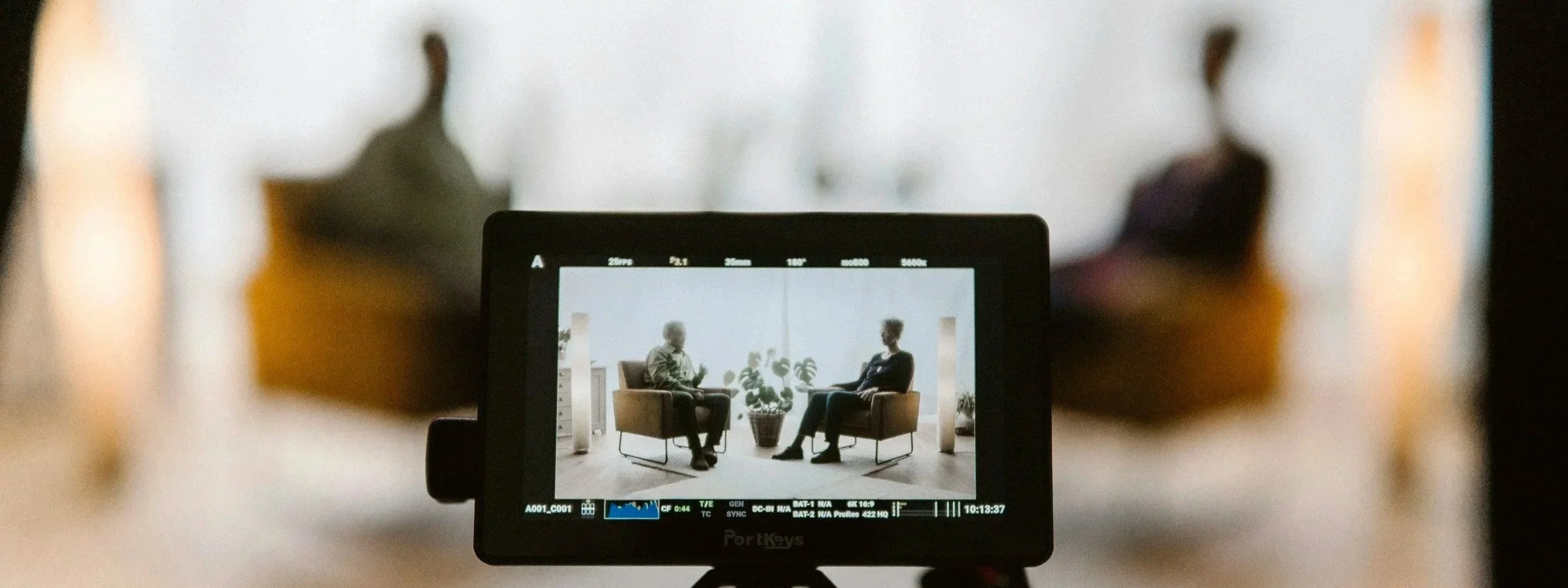
Viewers don’t only judge content. They judge conditions.
A low camera angle can make someone seem oddly passive. Weak audio can make a speaker seem less prepared than they are. A cluttered background can make the frame feel accidental. Clothing that clashes with the setting, lighting, or microphone setup can distract before the point has even landed.
None of those are vanity issues.
They’re legibility issues.
A professional screen presence is usually built from small choices that reduce friction. The goal isn’t to look expensive. It’s to look considered enough that the viewer can focus on the person and the point.
That matters even more now because so much business communication happens through screens. Teams are judged not only through campaign films, but through webinars, remote interviews, self-recorded updates, internal videos, and video calls. In that environment, screen presence isn’t a side issue. It’s part of how the business presents itself.
If you want to tighten the practical details around framing, lighting, audio, and background, how to look professional on video calls goes deeper without turning this page into a setup tutorial. The same goes for clothing choices, where what to wear on camera for a business video shoot can cover the details without turning this pillar into a styling guide.
The right level of polish is the one the message can carry
One of the easiest mistakes in business video is assuming that more finish always builds more confidence.
Often it doesn’t.
A smoother cut isn’t automatically a stronger cut. A tighter script isn’t always a better script. A more controlled tone isn’t always more convincing.
The real question is whether the level of finish suits the message being delivered.
A founder speaking about a difficult challenge may need some texture left in the delivery. A client talking about change may need pauses and specifics left intact. A team member describing their day-to-day experience may become less persuasive once every sign of spontaneity has been trimmed away.
This is where restraint matters.
Good production judgement doesn’t only know how to improve material. It knows when to stop improving it in ways that start working against the point.
I’ve also seen teams spend extra time smoothing a video in post, only to make the final cut feel less human than the original footage.
That line will move depending on format, audience, and use case. A brand film, a customer proof piece, a remote leadership update, and a social talking-head clip can’t all carry the same level of polish in the same way.
The better rule is not “make it looser”.
It’s “remove only what genuinely gets in the way”.
That matters commercially too. There’s a point where more time spent chasing tiny improvements in post gives you less return than getting the work out, using it properly, and putting effort into distribution.
| If you keep pushing polish in this area | What it may improve | What it may quietly reduce |
|---|---|---|
| editing out every pause and hesitation | speed, neatness, surface efficiency | human rhythm, realism, and a sense that the person is thinking in real time |
| tightening wording until it sounds heavily approved | brand control, consistency, internal comfort | warmth, ownership, ease, and conviction |
| adding narration to explain everything | structure, coverage, clarity in some formats | space for real people to carry meaning |
| making every visual detail feel tightly controlled | finish, consistency, brand neatness | credibility when the message needs more lived texture |
Different audiences read signals differently

Not every audience reads the same cues in the same way.
Some respond well to a calm, structured, highly considered presentation. Others are quicker to doubt anything that feels too shaped. Younger audiences in particular are often alert to the signs of performed relatability. They can spot when a brand is borrowing creator language, informal aesthetics, or staged spontaneity without the judgement to support it.
That doesn’t mean brands should swing to the other extreme and start performing roughness.
That usually fails as well.
The stronger move is to understand what feels proportionate to the audience. How much polish feels normal here. How much scripting becomes visible. How much control starts to show through the seams.
People are tired of surfaces that feel too processed. They want communication that feels clear, human, and grounded. That doesn’t mean everything should look raw. It means the audience can tell when the finish is doing more work than the substance.
That tension is especially clear with younger viewers, which is why how to make brand video Gen Z actually trust deserves its own article rather than a few paragraphs here.
Where production and editorial expertise become useful
This kind of video rarely improves through gear alone.
It improves through judgement.
That may mean deciding whether the story should be carried by a real speaker or supported by narration. It may mean directing someone in a way that helps them sound like themselves rather than a tidier version of themselves. It may mean recognising that the room, framing, or background is quietly weakening the speaker before the first line has landed. Or it may mean knowing what to leave in the edit so the finished piece still feels human.
Those aren’t cosmetic calls.
They shape whether the work connects.
For marketing teams, that’s the practical point. Better business video doesn’t come from chasing perfection. It comes from getting the fundamentals right, understanding what the video is for, knowing how it will be used, and resisting the urge to keep polishing past the point of return.
Just as importantly, once the work is ready, it helps to have a clear plan for how it’s actually going to be shared. Even strong content can underperform if no one has thought properly about where it will live, who it needs to reach, and how it will be used.
If this is the kind of judgement your team is trying to get right, that’s usually where experienced editorial and production support becomes useful.
When the work needs more than tools and tactics
The hardest part of business video isn't the production. It's the editorial judgement that decides whether the message lands or feels managed. If that's the kind of judgement your team is trying to get right on a real project, we can help shape the brief, the interview approach, and the level of polish before any cameras are involved.
What to read next
The next step usually depends on what still feels unresolved, whether that's spoken delivery, screen presence, on-camera dressing, or how younger audiences read modern brand content. These are the most useful next reads in this guide.
| Article | Best for | Who it suits |
|---|---|---|
|
|
Deciding whether voiceover is helping the video become clearer or simply making it feel more managed than it needs to | Marketing teams shaping brand, explainer, or interview-led videos and trying to judge whether narration is adding structure or weakening natural delivery |
| Improving how people come across on calls, webinars, remote interviews, and self-recorded updates without overcomplicating the setup | Teams and individuals who need to present clearly on camera and want their framing, sound, lighting, and background to support confidence rather than distract from it | |
| Choosing clothing that looks considered on camera and supports the video without creating avoidable distraction | People appearing in brand, interview, or corporate video content who want to come across clearly and professionally without looking over-styled | |
| Helping speakers sound more natural, less guarded, and more convincing when talking on camera | Marketing teams, founders, and subject matter experts who know their material but want support making their spoken delivery feel more relaxed and credible | |
| Understanding how younger audiences read polish, tone, relatability, and brand control in modern video content | Teams producing brand video for younger or more sceptical audiences and wanting the work to feel current, human, and proportionate rather than performative |