How to Produce a Corporate Storytelling Video Without Making It Feel Scripted
Last updated: March 18, 2026
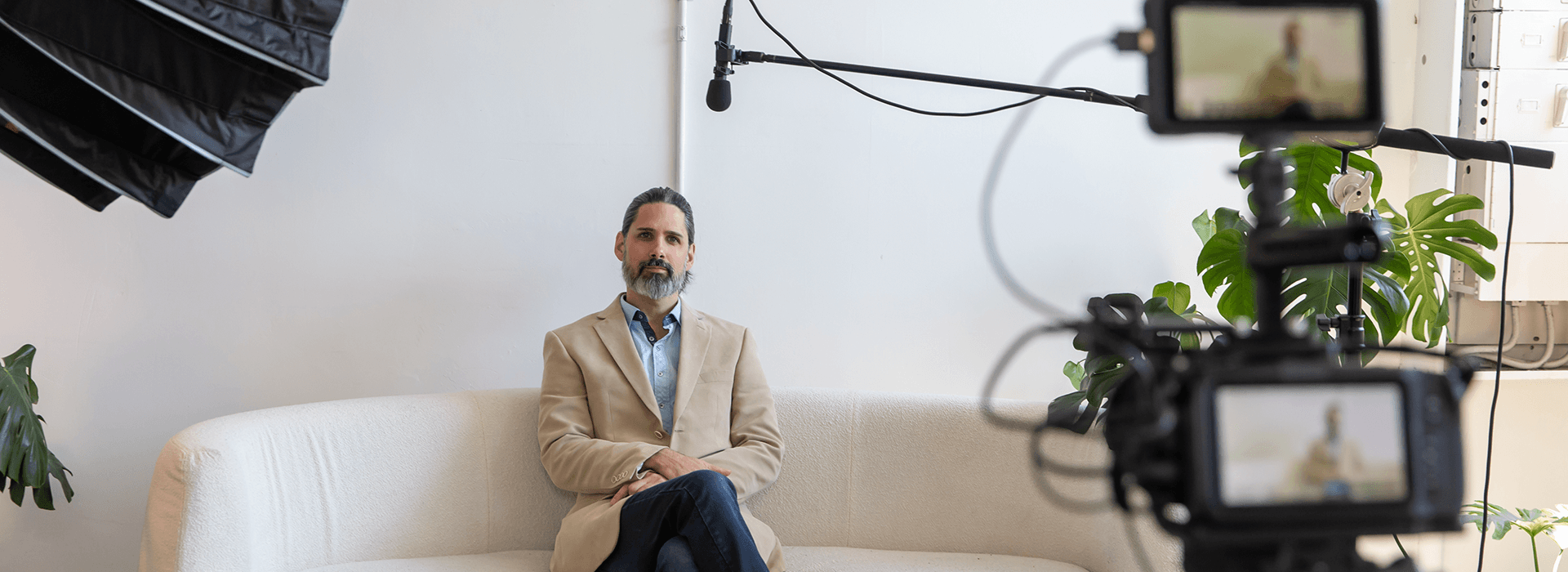
A lot of corporate storytelling videos go wrong in a very specific way.
Everyone agrees the film should feel more human. Less like a company overview. More like a story. So the team adds warmer scripting, reflective interview lines, stronger music, and a more polished ending. The result may look good, but it still feels managed.
That usually happens because story has been treated as tone rather than structure.
In a wider business video marketing strategy, storytelling is not there to make a film feel softer or more cinematic. It is there to help the viewer understand a real change clearly enough that the message feels earned. Who is this about? What was difficult, unclear, or unresolved? What changed? Why should anyone believe it?
If those answers are weak, production polish tends to expose the problem rather than hide it.
This is where a lot of corporate storytelling video production starts to drift. The intent is usually right, but the execution becomes too broad, too careful, or too brand-led to feel convincing.
Why corporate storytelling videos often feel false
The first mistake is treating story as something you add after the message is already fixed.
A business wants to communicate trust, innovation, expertise, or culture. Those may all be valid goals, but they are not stories on their own. They are claims. Story begins when the viewer can follow movement.
The second mistake is asking one video to do everything at once.
A single film gets asked to introduce the business, explain the offer, show personality, build trust, and feel memorable. That usually leads to vague structure and safe wording. The film ends up polished but weightless.
The third mistake is starting the storytelling conversation too late.
If story only gets discussed in the edit, the team often discovers it has enough footage, but not enough proof. There are attractive visuals and tidy interview answers, but not enough specific material to support a believable arc.
Start with a change the viewer can recognise
A corporate storytelling video usually becomes much easier to produce once you stop asking, “What do we want to say about ourselves?” and start asking, “What change does this video need the viewer to understand?”
That change does not need to be dramatic. In business video, it is often quieter than that:
confusion becoming clarity
hesitation becoming trust
inefficiency becoming a workable process
a hard-to-explain service becoming easier to understand
a customer problem becoming a visible result
That is the spine of the piece.
A useful planning test is to write three short lines before filming begins:
Before: what is true at the start?
Shift: what changes, and through what action or decision?
After: what is clearer, better, or more believable by the end?
If those lines stay vague, the film usually stays vague too.
It also helps to choose one point of tension. Not ten. That tension might sit with a customer, a founder, a team, a service process, or a common buyer doubt. But it needs a shape the viewer can follow.
Build the story from proof, not slogans
Once the change is clear, the next question is simple. What would make a reasonable viewer believe this?
That is where many corporate storytelling videos either become credible or quietly collapse.
If the film says the company is collaborative, what does that look like in practice? If it says the service removes friction, where do we actually see that? If it says a client trusted the team, what detail makes that trust feel earned?
Story becomes more convincing when it is built from things the audience can picture:
a contributor describing a real moment rather than a summary
a customer naming the problem in plain language
process footage that shows how something actually works
a visible before-and-after contrast
phrasing that sounds like a real person, not approved copy
This is why interviews matter so much. A stronger answer usually gives the editor something concrete to work with: a real example, a practical consequence, or a phrase that can stand on its own.
| Story stage | What the viewer needs | Useful material to capture | Common mistake |
|---|---|---|---|
| Starting point | understand the situation clearly | real context, environment, and plain-language framing | opening with a generic brand statement |
| Friction | see what is difficult, unclear, or at stake | specific examples, practical tension, recognisable difficulty | keeping everything so positive that nothing feels meaningful |
| Response | understand what changed the situation | a decision, process, action, or intervention | jumping straight from problem to success claim |
| Result | see what is different now | observable outcome, proof, testimony, or detail | ending on broad summary without evidence |
Plan the production around story beats
Once the story beats are clear, production planning becomes much more practical. The job is no longer to capture attractive footage and hope the structure appears later in the edit. It becomes deciding what evidence each part of the story will need, then protecting that material on the shoot.
A simple way to keep a storytelling film believable is to decide in advance what each stage of the story needs from the production.
| Story beat | What you need to learn or prove | What to capture on the shoot | What often goes wrong |
|---|---|---|---|
| Context | what world we are in and why it matters | location-setting visuals, working environment, relevant tools, opening interview context | the film opens with polished but interchangeable visuals |
| Problem or tension | what was difficult, unclear, or inefficient before | specific interview prompts, examples of friction, process steps showing where the problem sat | contributors stay so positive that the result feels unearned |
| Turning point | what action, decision, or approach changed things | process footage, demonstrations, meetings, hands-on work, service delivery | the film skips the thing that actually made the difference |
| Result | what is recognisably different now | concrete outcomes, before-and-after contrast, customer reflections, observed change | the ending relies on broad success language rather than proof |
Not every project needs a full storyboard, but nearly every story-led video needs some level of visual planning. For a straightforward interview-led piece, a shot list may be enough. For a more layered brand film or case study, a fuller visual plan often helps because the production is carrying more narrative responsibility.
Keep the people on screen sounding like themselves
This is where many corporate storytelling videos either become human or start sounding approved.
Businesses often worry that if contributors are not tightly scripted, the message will drift. That is fair. But the opposite problem is often worse. The speaker sounds careful, controlled, and slightly unlike themselves. The wording may be correct, but trust weakens.
A better rule is this: prompt where possible, script where necessary.
If the goal is credibility, warmth, or lived explanation, guided prompts usually work better than over-written answers. Better interview material often comes from simplifying the prompt, staying with useful detail, asking for examples rather than summaries, and reducing the pressure in the room.
The same principle applies to teleprompter-led delivery. The problem is rarely the tool itself. It is usually that the script was written to read well in a document rather than speak well out loud.
Edit for clarity and trust
A strong storytelling edit is not the same as an emotional edit. Its job is to make the viewer understand the movement quickly and believe it as they go.
That usually means removing repetition before removing humanity.
A better edit tends to do a few things well:
open on something the viewer can recognise quickly
keep only the lines that move understanding forward
preserve phrasing that feels lived rather than over-written
use b-roll to support meaning, not distract from weak substance
let the ending stop once the point has landed
Trust often weakens in small ways. The music swells before the story has earned it. The visuals look impressive but do not deepen meaning. The answer has been polished until it no longer sounds natural. None of those choices seems fatal on its own, but together they can create distance.
A simple pressure test before sign-off
Before the film is approved, it helps to run a few blunt checks.
| Check | What you’re testing | Warning sign |
|---|---|---|
| The story is clear | a new viewer can tell what the film is really about | the video describes the business but never settles into a recognisable story |
| The change is visible | the viewer can see what shifted between the beginning and end | the film lists qualities and intentions but does not show movement |
| The proof is strong enough | claims are backed by examples, detail, process, or testimony | the strongest lines are still broad statements rather than evidence |
| The people sound believable | contributors sound like themselves rather than spokespeople | the wording feels polished but unnatural or over-managed |
| The ending lands cleanly | the viewer leaves with one clear impression | the film keeps explaining after the point has already landed |
If several of those warning signs appear, the problem is usually not that the video needs more polish. It is that the story has not yet been made clear enough, specific enough, or provable enough.