10 Unconventional Event Venues in London That Can Still Work for Filming
Last updated: March 25, 2026

The most common venue mistake isn’t booking a dull room. It’s booking a beautiful one that makes filming harder than anyone expected.
That usually shows up late. A venue looks distinctive in the hire deck, the team loves the atmosphere, and the booking gets signed off because it feels more memorable than another standard conference suite. Then the event day arrives and the problems turn practical. The keynote sounds boxy. There’s nowhere quiet for interviews. Loading is slow. Power is awkward. The room that looked dramatic in stills becomes difficult to light consistently once speakers, screens, and audience movement are in the mix.
That’s the real issue this article solves. Not whether unusual venues are a good idea, but how to judge which ones will still work once cameras, microphones, and edit goals enter the picture.
This guide looks at 10 unconventional London venues worth considering, with a focus on the filming trade-offs that are easiest to miss before production begins.
The problem with unusual venues isn’t taste. It’s production reality
There’s nothing wrong with choosing a more characterful space. Often it’s the right decision. Generic rooms can make events feel interchangeable, and that usually shows up in the footage too.
But unusual venues introduce trade-offs that standard event spaces have already solved. House AV may be limited. Acoustics may be charming in person and unhelpful on mic. Heritage rules may restrict rigging, access, or where cameras can go. A room that feels atmospheric to guests can feel underlit, uneven, or visually cluttered once you need clean coverage, cutaways, and usable interviews.
So the real decision is not conventional versus unconventional. It’s whether the venue’s character supports the type of event video you’re actually trying to make, and that choice becomes much easier when you’re planning footage around its post-event use. That is where event video production planning for London events helps keep the venue decision tied to the outcome, not just the atmosphere.
If you’re comparing options early, these venues are useful because they show how visual character and production practicality often pull in different directions.
10 unconventional London venues worth considering, with filming trade-offs
These venues are useful not because they’re universally right, but because they show how visual character and production practicality often pull in different directions.
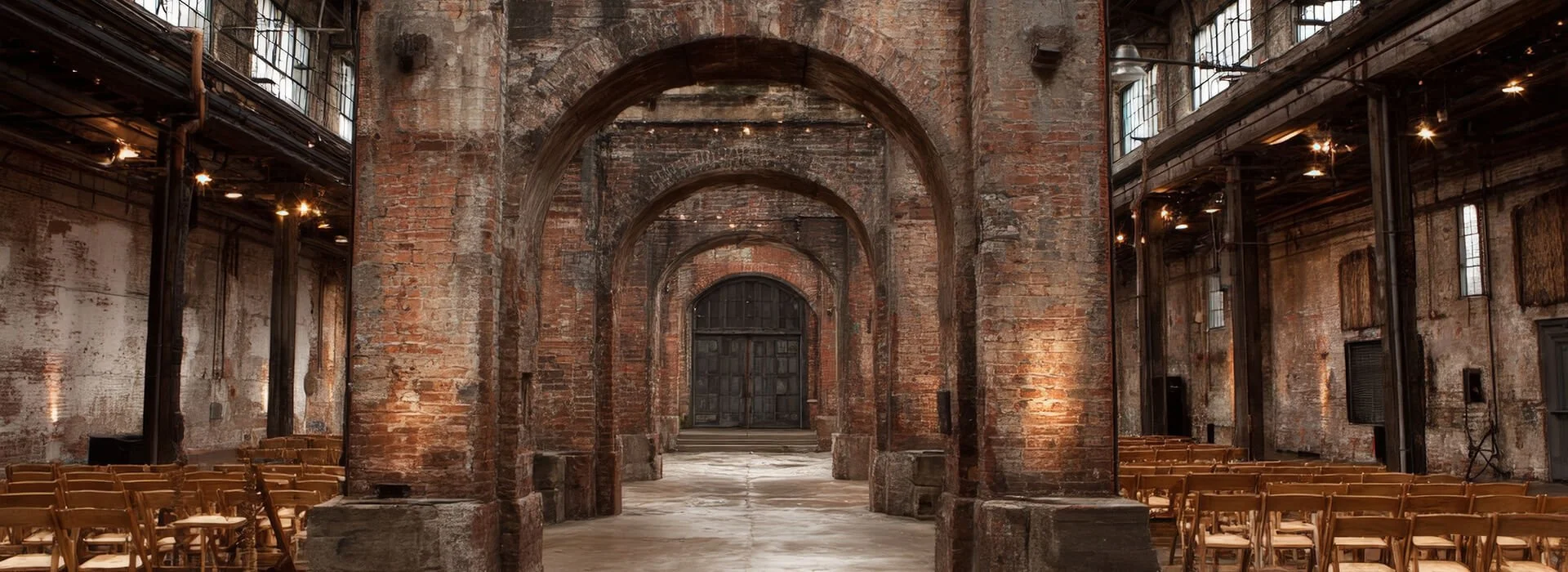
Illustrative example only. A venue can look striking on camera and still create production trade-offs around sound, access, and lighting.
| Venue | Area | Current capacity / venue note | Best fit for filming | Main production watch-out |
|---|---|---|---|---|
| 100 Barrington | Brixton | Official brochure lists up to 120 seated / 190 standing, plus load-in on site and wheelchair access throughout. | Modern brand events, industrial texture, flexible social and stage coverage | Rawer spaces often need more attention to sound, comfort, and coverage flow than the photos first suggest. |
| Crypt on the Green | Clerkenwell | Dry-hire venue. The Crypt itself is listed at 200 theatre style / 300 standing, and includes access to The Well as a useful adjacent green room or storage space. | Atmospheric dinners, intimate panels, dramatic cutaways, nearby interview overflow | Reverb is the obvious risk if clear speech is central to the edit. |
| Cutty Sark | Greenwich | Multi-space venue, with Dry Berth up to 400 standing or 300 theatre, plus smaller spaces including the ’Tween Deck and Weather Deck. | Heritage-led events, standout b-roll, arrival moments, strong sense of place | Movement, setup, and format choices need to be planned by specific space, not treated as one flat-capacity venue. |
| Frameless | Marble Arch | Official events material supports receptions for up to 450, with plug-in presentation tech, event Wi-Fi and ethernet, and options for custom content on gallery walls. | Immersive launches, hybrid-style moments, spectacle-led highlights edits | Screen-heavy environments can complicate exposure, colour balance, and interview control. |
| Icetank | Covent Garden | Official site lists ground floor capacity at 80 standing / 50 theatre style, with floor-to-ceiling windows, blackout electric blinds, and street-level access doors. | Brand launches, press events, controlled interview setups, projection-led staging | The cleaner the room, the more the event design itself has to carry the visual interest. |
| Shoreditch Treehouse | Shoreditch | Up to 60 guests, with breakout areas, a 3m screen, AV tech, natural daylight, kitchen, and air conditioning. | Intimate talks, workshops, leadership sessions, controlled interviews | Stairs-only access and smaller scale make it better for compact formats than larger conferences. |
| The Asylum | Peckham | Official maximum capacity is 120, with chairs, tables, lighting, and heating included. | Creative events, premium small-to-mid-size gatherings, textured cutaways | Acoustic control needs checking carefully before committing to speech-heavy coverage. |
| The Magic Circle | Euston | The theatre has up to 126 seats in the stalls plus 36 in the balcony, with modern AV, lighting, and backstage dressing rooms. | Story-led conferences, themed launches, presentation formats that benefit from built-in theatricality | The aesthetic is highly specific, which helps some brands and narrows the fit for others. |
| The Old Operating Theatre Museum | Southwark | Venue hire offers exclusive access to the museum, and film hire is stated for up to 50 people. | Small specialist events, expert talks, short-form editorial clips, very distinctive cutaways | Tight space and operational limits mean it suits compact formats better than broad coverage ambitions. |
| Two Temple Place | Victoria Embankment | Exclusive hire only. Availability is typically May to December, with drinks receptions for up to 300 and dinners for up to 120. | Premium talks, leadership events, visually rich brand films, formal receptions | Heritage constraints and exclusive-hire economics mean it suits high-value events more than flexible mid-tier bookings. |
What makes a venue good for filming, not just for hosting
Sound usually fails before visuals do
People tend to worry first about how a room looks. Crews usually worry first about how it sounds.
That’s sensible. Audiences will often forgive a darker corner or a less dramatic background. They won’t forgive muffled speech, boxy echo, or a keynote that sounds like it was recorded in a tunnel.
This is where older halls, chapels, crypts, railway arches, and large industrial rooms need proper scrutiny. Hard surfaces can make applause, laughter, and room tone feel lively in person while making spoken-word content harder to use later. If the event includes panels, keynote clips, or testimonial edits, you need to know whether the room helps speech or fights it.
A useful rule is simple. If spoken clarity matters, do not assume the main room can do every job. Build in a separate interview room or quieter side space from the start.
Lighting needs control, not just atmosphere
Natural light can be a real advantage. It can soften faces, reduce setup time, and help the footage feel less corporate.
But attractive light and controllable light are not the same thing.
Large windows can shift quickly through the day. Mixed light from practical fixtures, uplighters, and daylight can create colour problems that are annoying to fix later. Some immersive spaces look impressive to guests but were designed for mood, not for clean skin tones, readable expressions, or dependable stage coverage.
That doesn’t mean you avoid dramatic spaces. It means you check whether the drama stays usable once speakers move, presentations begin, and the room fills with people.
Access, power, and sightlines shape what you can actually capture
A venue can be visually strong and still be awkward for filming.
Tight loading routes, restricted setup windows, no clear camera positions, or limited power distribution all affect what coverage is realistic. So do low balconies, crowded furniture layouts, and stage positions that leave cameras fighting with audience traffic.
These are the details that separate a venue that merely looks interesting from one that actually supports a smooth filming day. They also shape whether you can capture more than the obvious. If access is poor and timings are compressed, the crew may get the stage content but lose the interviews, reaction shots, arrival moments, or sponsor detail that make the edit feel complete.
The questions to settle before you confirm the booking
Take these questions into the venue recce rather than leaving them for production week.
| Area to check | Question to ask the venue | Why it matters |
|---|---|---|
| Access | What is the real load-in route, what are the setup windows, and are there any restrictions on when the crew can arrive? | Tight access can reduce what the crew is able to capture, even when the room itself looks ideal. |
| Audio capture | If we need a recording of speeches, panels, or presenter audio, can our crew plug into your in-house sound system for a clean feed? | This quickly tells you whether clean event audio is realistically available or whether you will need a separate recording plan. |
| Audio capture | If we cannot take a direct feed, would we need to hire an external AV or audio team to capture reliable sound? | This exposes hidden cost, coordination, and risk before the booking is signed off. |
| AV infrastructure | What AV is built in, who operates it, and what outputs are available for filming or streaming? | “The venue has AV” is too vague. You need to know what is actually usable for production. |
| Interviews | Is there a separate quiet room we can use for interviews, testimonials, or sponsor clips during the event? | Without this, you often lose the most reusable and persuasive footage from the day. |
| Lighting | Can daylight be controlled with blinds, blackout options, or other light management if conditions change? | A room can look beautiful in a viewing and still become difficult to expose consistently once the event is live. |
| Noise | What changes once the room is full, and are there any known issues with echo, traffic noise, nearby bars, or adjoining spaces? | The room you view on a quiet weekday may behave very differently during a live event. |
| Permissions | Who signs off filming inside the venue, and do exterior shots or common areas require separate permissions? | Venue control, estate rules, and borough rules do not always sit with the same party. |
| Power | Where are the power points, and are they positioned where cameras, lights, and audio actually need them? | Awkward power distribution is one of the simplest ways to create delays and coverage compromises. |
| Staging and sightlines | Where can cameras go without blocking the audience, presenters, or venue operations? | A stylish layout can still produce weak coverage if camera positions are too restricted. |
Match the room to the footage you need after the event
This is where better judgement usually shows.
If the post-event plan is a polished highlights film with fast pacing, reactions, atmosphere, and light interview use, a visually unusual venue may be a strong fit even if the room is not ideal for long-form speech.
If you need keynote edits, full-session recordings, internal documentation, sponsor clips, and a bank of clean testimonials, you should judge the venue much more harshly. In those cases, operational reliability usually matters more than novelty.
That doesn’t make the decision less creative. It makes it more honest.
The best venue is rarely the one with the strongest sales deck. It’s the one that gives you the fewest avoidable compromises once the event is live and the footage needs to keep working afterwards.
The best venue choice is often the least sentimental one
There’s nothing conservative about rejecting a venue that will make the footage worse.
In fact, it is usually the more strategic decision. A venue should earn its place not just through atmosphere, but through usefulness. Can it support clean speech, workable light, practical access, and the extra capture points that make event footage valuable after the day itself?
If yes, an unconventional venue can be a real advantage.
If not, the room may still impress on the day while quietly reducing the value of everything filmed inside it.
That is the judgement worth getting right.
Need help filming an event?
If you’re planning an event and want experienced support with filming, audio capture, interviews, and venue practicality, we offer event filming as part of our services.
For a no-obligation quote, you can get in touch here.