How to Choose Music for a Corporate Video Without Weakening the Message
Last updated: March 18, 2026

A lot of corporate videos do not go wrong in the shoot or even in the edit.
They go wrong right near the end, when the music goes in.
The cut may already be clear. The interviews may be solid. The structure may do its job. Then a track gets added that sounds polished on its own, but somehow makes the whole piece feel less believable. A customer story starts sounding staged. A founder message feels more rehearsed than it did in the room. A proof-led film begins pushing emotion harder than the material can support.
That is usually not a technical problem. It is a judgement problem.
Music in business video is often treated as finishing polish, but it does more than tidy the edges. It shapes pace, frames tone, and changes how deliberate or over-managed the piece feels. In the same way that business video distribution and creative strategy depends on making better creative decisions rather than simply making more content, soundtrack choice affects whether a video feels clear, proportionate, and trustworthy.
Why soundtrack choices often go wrong late in the process
One reason music gets mishandled is timing.
It often arrives after the main editorial decisions have already been made. By that stage, the team wants the video to feel finished. A temp track goes in, everyone reacts to the mood it creates, and the discussion turns too quickly into preference. Someone wants it to feel more emotional. Someone else wants it more modern. Someone says it should feel more premium.
Those reactions are understandable, but they are not precise enough to guide the decision well.
Another issue is that music often gets asked to solve the wrong thing. If the opening feels slow, the soundtrack gets pushed harder. If the interview feels flat, the score is meant to add feeling. If the edit lacks momentum, the music is expected to inject it. Sometimes that works a little. Often it just masks the real issue while introducing a new one.
That is why soundtrack choice works better when it is treated as part of the message rather than as decoration.
Decide what the music is there to do
Before listening to tracks, define the job.
Not the style. The job.
Does the music need to add momentum? Hold tone steady? Smooth transitions? Give a montage coherence? Create breathing room around speech? Help an information-heavy piece feel less dry without becoming distracting?
If you cannot answer that clearly, you are probably choosing by taste.
Tone is not the same as genre
Teams often talk about music in genre language because it feels concrete. Piano-led. Electronic. Acoustic. Ambient. Cinematic.
That can help narrow the search, but it does not settle the decision. What matters more is how the track behaves inside the video.
Is it restrained or insistent? Warm or slick? Steady or restless? Hopeful or triumphant? Supportive or attention-seeking?
A piano track can feel thoughtful and human, or bland and overfamiliar. A cinematic cue can feel confident, or make modest claims sound overblown. A light electronic bed can make a piece feel current, or make it sound like a dozen other explainers in the same category.
Genre helps you browse. Function helps you choose.
Start from the viewer, not the team playlist
The better starting point is the viewer’s state of mind.
What are they arriving with? Curiosity, scepticism, limited time, low attention, cautious interest, existing trust that needs reinforcing?
Then ask what emotional pressure the soundtrack should apply.
In some videos, the answer is not very much.
A testimonial usually works best when the viewer feels they are hearing something grounded and credible. A founder message often needs calm control more than cinematic uplift. A recruitment film may have more room for energy and motion. A launch or event recap can usually carry a stronger pulse because the footage already contains visible momentum.
The material needs to earn the feeling. Music can support that feeling, but it should not try to create significance that the structure, proof, or visuals have not already built.
What the wrong music does to trust
Most viewers will not consciously analyse the soundtrack. They will simply register whether the piece feels proportionate.
That is the key word here: proportionate.
Music helps when it gives shape without overclaiming. It can make pacing feel purposeful. It can hold a tone together across different scenes. It can stop a business video from feeling dry or mechanically assembled.
It starts to hurt when it pushes harder than the content can carry.
| When the music does this | How it tends to feel | Why it weakens the video | Better adjustment |
|---|---|---|---|
| Pushes more emotion than the proof supports | Inflated or over-sold | The soundtrack starts making claims the content has not earned | Use a lighter, steadier cue with less rise |
| Competes with speech | Busy or harder to follow | The viewer’s attention splits between the message and the soundtrack | Reduce density, lower intensity, or simplify the arrangement |
| Makes the piece feel overly polished | Managed, staged, or generic | It pulls the video away from natural communication | Choose a track with more space and less insistence |
That is why credibility often depends on restraint rather than intensity.
A better way to choose a soundtrack
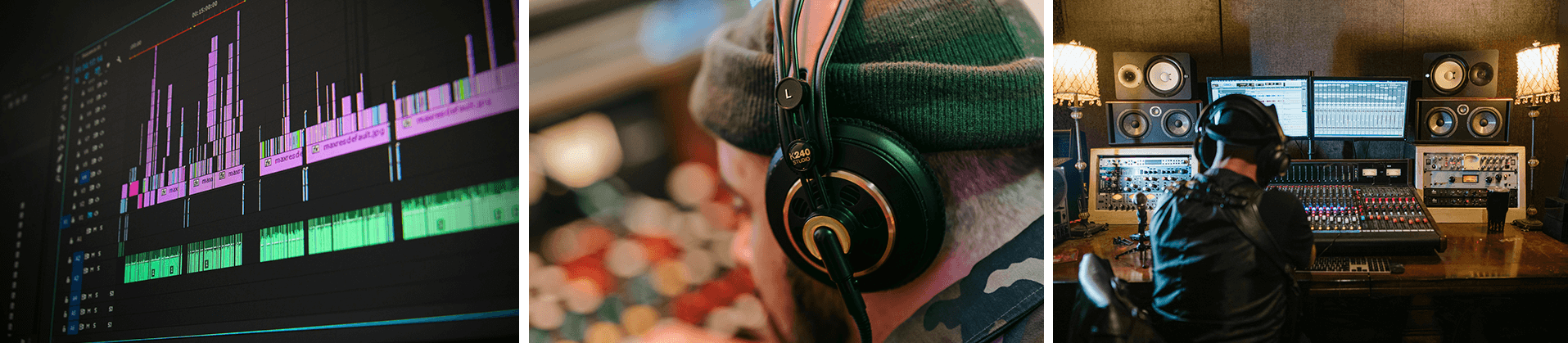
The strongest soundtrack decisions usually come from process, not instinct alone.
Build the message before you score it
Do not let the music define the video before the editorial structure is clear.
If the soundtrack is doing too much emotional work, the issue is often structural rather than musical. Tightening the story structure first usually makes the final music choice feel more proportionate and more believable.
First, work out where the piece turns, where proof arrives, where pace should lift, and where the viewer needs space. Once that is in place, the soundtrack decision becomes easier because you are choosing against a real communication problem rather than a vague mood brief.
If the contributor sounds too polished or over-rehearsed, the answer may not be more emotional music. The answer may be to fix the interview material or direction. That is often the bigger issue in getting more natural answers in corporate video interviews.
Test tracks against speech, structure, and edit points
Do not judge tracks in isolation.
Test a small number of options against the same short section of actual video. As you test, ask:
Does the track leave space for the voice?
Does it help the edit breathe, or flatten everything into one emotional note?
Does it build too early?
Does it keep asking to be noticed?
Does it still feel right once dialogue is on top?
A simple working method helps.
| Stage | What to do | What you are checking |
|---|---|---|
| Choose | Shortlist 3 to 5 tracks with different energy levels but similar tonal fit | Whether the overall direction is right |
| Test | Drop each track under the same 20 to 30 second section | Whether it supports speech, pacing, and credibility |
| Reject | Remove any track that makes the message feel bigger, slicker, or more sentimental than it should | Whether the music is distorting the editorial intent |
What different business video formats usually need from music
The same soundtrack logic does not apply equally across every format.
| Video type | What the music usually needs to do | What often goes wrong |
|---|---|---|
| Testimonial or founder-led video | Add shape and continuity around real speech | The score pushes emotion further than the speaker does |
| Brand or culture film | Carry tone and visual cohesion across montage-heavy sequences | The music feels like stock inspiration rather than a precise fit |
| Explainer or demo | Keep energy steady without making information harder to process | Busy rhythm and dense arrangement compete with clarity |
| Event recap or launch video | Reinforce movement already visible on screen | The music tries to manufacture excitement the footage has not earned |
| Internal leadership or change comms | Support attention and tone without sounding theatrical | Straight communication starts to feel staged |
Common mistakes in approval rounds
Approval rounds are where good soundtrack choices often get diluted.
A track that was quietly doing its job gets replaced because it is “not doing enough.” Another one comes in that feels more cinematic in review, but less credible across the whole piece. Or the music stays because the team has become attached to a temp version that shaped the rhythm of the cut.
A few patterns come up often:
choosing the music too early
confusing emotional force with effectiveness
using the soundtrack to compensate for weak structure
judging tracks without speech on top
picking vocals for a speech-heavy video
mixing music too high because it sounds good in isolation
The test should not be “Does this feel impressive?” It should be “Does this make the message clearer, more watchable, and more believable?”
A final checklist before you lock the music
Before signing off, ask:
Does the soundtrack support the message rather than enlarge it?
Is the music in proportion to the proof on screen?
Does the spoken content remain easy to follow?
Does the track help the pace without pulling focus?
Would a lighter treatment improve trust?
Is the soundtrack strengthening the edit, or covering an unresolved editorial problem?
In many business videos, the best soundtrack is the one the viewer barely notices.
That is not a weakness. It is often a sign that the music is doing its real job: supporting tone, pace, and clarity without trying to do the message’s work for it.